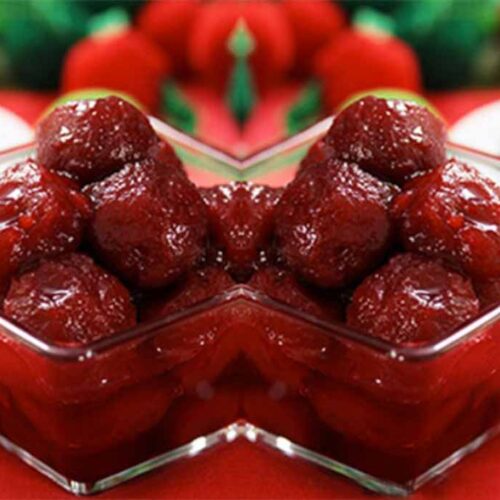
Dulce de Icacos (Colombian Coco Plum Preserve)
A classic Colombian Caribbean sweet made by stewing peeled icacos in a lime-infused, cinnamon, and clove syrup.
Ingredientes
- 1 kg 2.2 lbs Icacos Hicacos (Coco Plums)
- 6 Limes divided use: 4 for soaking, 2 for cooking
- 500 g approx. 2 ½ cups White sugar
- 2 liters Water
- 1 Cinnamon stick
- 15 Whole cloves
- Red food coloring Optional, but traditional for the vibrant red look
Preparación paso a paso
- Prepare and Peel the Fruit Wash the Icacos thoroughly. To make peeling easier, score the skin of each fruit by making a small cross-shaped incision at the ends. Place them in a plastic bowl and squeeze the juice of 4 limes over them. Add enough water to cover and let them soak for 2 hours. (Note: The acidity of the lime helps loosen the thin skin. After 2 hours, the skin should slide off easily by hand. Discard the skins.)
- Create the Spiced Syrup Base In a large pot, combine 2 liters of water, the sugar, cinnamon stick, and cloves. Bring to a boil over medium-high heat. Let the liquid reduce by about half to concentrate the flavors before adding the fruit.
- Stew the Fruit Once the liquid has reduced, add the peeled Icacos. At this stage, add a few drops of red food coloring (if using) to achieve that classic bright red hue. Take the remaining 2 limes, cut them partially into a cross shape (keeping the fruit whole), and toss them directly into the pot.
- Simmer to Perfection Lower the heat to a simmer. Cook slowly until the syrup thickens to a honey-like consistency and the fruit is fully cooked and tender. The syrup should be dense, not watery.
- Cool and Serve Remove from heat and let it cool completely. The syrup will thicken further as it cools. Serve at room temperature or chilled.
Datos Curiosos
- The "Nuez" (The Nut): Don't just eat the flesh! The seed inside the Icaco is not hard like a stone; it is brittle. Crack it open with your teeth to eat the white kernel inside—it tastes like almond or coconut and is considered the best part of the treat.
- The Perfect Pairing: In Colombia, we rarely eat sweet preserves alone. To balance the sugar, serve this with a slice of fresh, salty white cheese (like Queso Costeño) or a dollop of cream cheese.
- Holy Week Tradition: This is one of the star recipes during Easter in Colombia, where families prepare large batches of sweets to share with neighbors and friends.
- Regional Names: In English, this fruit is often called Coco Plum, Cotton Plum, or Paradise Plum.