
Colombian Beef Foot Taffy
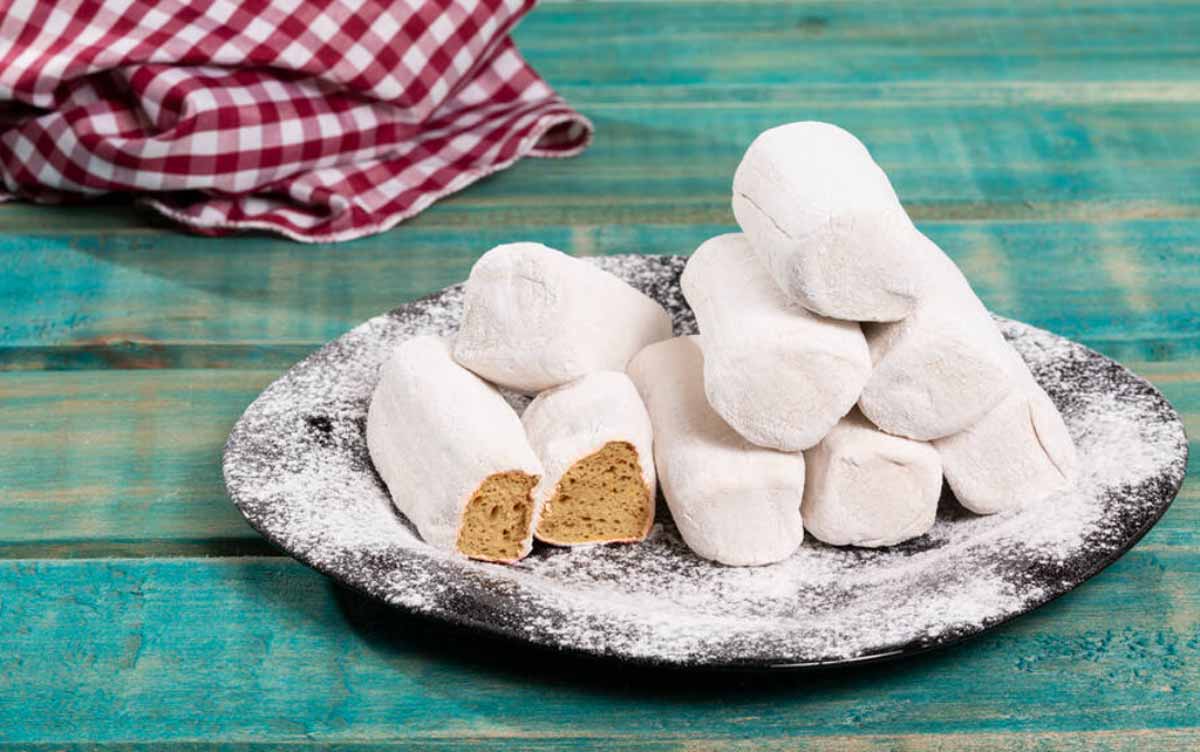
Colombian Beef Foot Taffy (Dulce de Pata) is a confectionery icon from the heart of Colombia, specifically the town of Andalucía in the Valle del Cauca region, often called the “Land of Jelly”.
Don’t let the main ingredient fool you. By slow-cooking the collagen-rich beef foot and mixing it with Panela (unrefined cane sugar), the result is a sweet, chewy, and airy treat with a texture very similar to nougat or marshmallows. In Colombia, it is believed to be incredibly nutritious and beneficial for health due to its high natural collagen content. Whether you know it as “Templones” in Venezuela or “Manjar de Pata” elsewhere, this recipe is a labor of love that yields a sweet piece of history.
Colombian Beef Foot Taffy
An artisanal, collagen-rich Colombian sweet made from slow-cooked beef broth and panela. It has a chewy, marshmallow-like texture and is dusted with cornstarch
Utensilios y Equipos
- Large Pressure Cooker (Recommended to save time)
- Fine mesh strainer
- Large pot for reduction
- A strong hook (traditional) or a heavy-duty stand mixer (modern adaptation) for pulling the candy
- Tray for shaping
Ingredients
- 1 Large Beef Foot (Pata de res, cut into pieces by your butcher)
- 2 Large blocks Panela (approx. 2 lbs / 1 kg. Substitute: Dark muscovado sugar or piloncillo if panela is unavailable)
- Water (Enough to cover the meat completely)
- 1 cup Cornstarch (Fécula de maíz, for dusting)
- Vanilla extract, 3 Cloves, 1 Cinnamon stick. (Optional Aromatics)
Step-by-step preparation
- Clean and Purify the Meat Thoroughly wash the beef foot pieces. It is crucial to scrub them well with lime or lemon juice and scald them with hot water to remove any impurities. Rinse well.
- Extract the Collagen Place the clean hoof pieces in a pressure cooker and cover with water. Cook on high pressure for approximately 2 to 3 hours (or 5 to 8 hours in a regular pot) until the meat and cartilage completely detach from the bone and are very soft.
- Strain and Separate Strain the liquid through a fine sieve into a clean pot. Discard the bones. Allow the broth to sit for a moment so the grease floats to the top. Carefully skim off and discard the layer of fat/oil, keeping only the gelatinous broth.
- The Sweet Reduction Place the skimmed broth in a large pot over medium heat. Add the Panela (and cinnamon/cloves if using). Simmer and stir constantly to prevent burning. You are looking for the mixture to thicken into a syrup that reaches the "soft ball stage" (known locally as punto de melcocha). To test, drop a bit into cold water; if it forms a pliable ball, it is ready. Add vanilla extract at the end if desired.
- The "Blanqueado" (Whitening/Pulling) Pour the thick mixture onto a greased tray and let it cool until it is safe to touch but still warm and pliable (about 2 hours). This is the critical step: You must incorporate air to turn it white.Traditional Method: Hang the mass on a wooden hook (garabato) and pull it, fold it over, and pull again repeatedly.Modern Method: Pull and stretch deeply with your hands (greased) or use a heavy-duty mixer with a dough hook on low speed.Continue this process until the dark brown caramel turns into a shiny, creamy white or golden-beige color.
- Shape and Cut Once the mixture is aerated and firm, stretch it out into long ropes or cylinders on a table dusted with cornstarch.
- Dust and Serve Cut the ropes into bite-sized cylinders (approx. 2 inches long). Roll them generously in the Cornstarch (Fécula de maíz) to prevent sticking. Let them set completely before serving.
Interesting Facts
- You might see two versions in Colombia. The “White Gelatin” (this recipe) is pulled to aerate it. The “Black Gelatin” is not pulled as much and is often coated with ground Panela instead of cornstarch.
- This dessert is historically given to pregnant women and the elderly in Colombia because of the immense amount of natural collagen, which is great for skin and joints.
- The pulling process (blanquear) is a workout! In Valle del Cauca, this is an art form passed down through generations.
También te puede interesar
Dulce de Icacos: The Tropical Coco Plum Preserve
Stewed Rose Apples in Syrup
Traditional Candied Cashew Fruit (Dulce de Merey Llanero)