
The Legend of The Candileja: The Terrifying Fireball of the Colombian Plains
Quick Summary
Legend has it that in life, The Candileja, or the Fireball, was a beautiful woman named Candelaria. She married Esteban, a man with a strong temper who was a partygoer and a coplero, a singer of traditional improvised verses. This marriage produced two sons: one named Sigifredo and the other named Esteban, just like his father.
One night, the husband was getting ready to attend the town festivities without his wife. She warned him not to go to the party unless she accompanied him. When the husband refused to take her, the young woman flew into a rage. She grabbed an ax and, regardless of her two sons watching right in front of her, struck her husband down, killing him instantly. Afterward, she forced her children to help her bury him.
(Also read: The Legend of La Patasola)
As the years passed, the widow received countless suitors. However, none managed to win over the beautiful woman, who devoted herself entirely to raising her sons. When Sigifredo turned 15, he became a tall and handsome young man. His mother seduced him and turned him into her lover. She guarded him jealously and chased away any potential suitors the boy had.
When Esteban, the youngest son, turned 15, he also grew into an attractive appearance. He was a strong-willed, masculine young man with good manners. Consequently, his mother lusted after him and tried to seduce him, just as she had done with his brother. However, Esteban refused, possessing a deeper understanding of morality and the wickedness of such acts. Blinded by rage once again, the woman murdered her son, driven by the belief that if he could not be with her, he would be with no one.
(Also read: The Legend of María la Larga)
The woman grew old without ever repenting for her actions. When she passed away, Saint Peter received her. Due to her wicked deeds, he condemned her to wander the world engulfed in flames.
The terrifying Candileja appears on old dirt roads, frightening nocturnal travelers with her imposing presence. She takes particular pleasure in scaring and dealing out punishments to unfaithful men, drunkards, and those who like to wander late at night.
(Also read: Myth or Legend of The Mother of the Forest)
On many occasions, she is considered a protective spirit for children. She punishes teachers who allow bullying in schools, or adults who force minors to work. Furthermore, she sometimes acts as a guide, leading children who get lost at night back to their homes.
Other Versions of the Legend of The Candileja or The Fireball

Alternative versions of this legend recount that The Candileja was once an old woman who endlessly spoiled her two grandchildren. As a result, the boys grew up to be rude, ill-mannered, and cruel to their own grandmother.
The two grandchildren spent all day jumping around, breaking household items and furniture, and playing humiliating pranks on the old woman. One of these vile acts involved demanding that their grandmother get down on all fours and act as a pack mule so they could ride her. Desperate to please them, the elderly woman agreed. They saddled her up and spent the entire day riding on the poor woman’s back.
(Also read: The Legend of The Animero)
When she died and arrived at the gates of heaven to account for her life, Saint Peter received her with anger. He reprimanded her for her lack of strictness in raising her grandchildren. As a result, he condemned her to purge her sins in the mortal realm as three fireballs with flaming tentacles. The three spheres represent the body of the old woman alongside her two grandsons.
Learn the story of The Candileja in the following video:

The two previous tales are the most well-known iterations of the legend. However, there are other stories recounting different events surrounding the origin of this specter.
One of these accounts claims that The Candileja is the spirit of a woman who burned to death in her home alongside her children in the Valle de las Tristezas (Tatacoa Desert). Another version suggests she is the ghost of a strong-willed woman who killed her son, Juan, in a fit of rage. Consequently, she is cursed to wander the earth searching for seven men named Juan, all born from the same mother. Until she finds them, she cannot be freed from her punishment.
(Also read: The Legend of The Mother of Water)
In yet another variant, she is said to be the spirit of a couple who engaged in premarital sex. During the act, a lightning bolt struck the cabin they were in. The fire engulfed them until they turned into a flaming ball that roams the world, impossible to extinguish.
What is the Origin of the Legend of The Candileja?
The Candileja is a tale originating in the Eastern Plains of Colombia and Venezuela. Although there are several versions regarding its origins, almost all of them agree that it centers around a woman condemned to wander the world in sorrow.
The reasons for the punishment vary depending on the specific act that sparked the myth in its different variations. Sometimes it stems from the murder of a husband or children, or from engaging in premarital affairs. In other instances, it is due to a grandmother’s excessive indulgence while raising her grandchildren.
The common thread running through almost all the accounts is that these curses fall upon sinful acts and are imposed by holy figures like Saint Peter or God. This closely ties the lore to Christian morality, functioning as a tool of the era to warn women about the consequences of wicked behavior.
(Also read: The Legend of The Weeping Woman)
Over the years, there have been recorded sightings by peasants who claim to have spotted the fireball on mountain trails. These encounters occur mostly during the summer, though some people report seeing her on rainy days.
Scientifically, many have explained the phenomenon using two theories. One points out that they are simply wildfires caused by high summer temperatures. The other suggests that during severe storms, a meteorological phenomenon called St. Elmo’s fire occurs. This is caused by the ionization of the air, generating luminescence on metal fences and wind indicators.
How to Protect Yourself from The Candileja
The most effective protection against this apparition is yelling profanities, insults, and curse words at her, accusing her of being an evil entity. Paradoxically, prayers and holy words attract her rather than scare her away. You can also throw a lasso as far away from the specter as possible; The Candileja will chase after it, giving the victim a chance to escape.
(Also read: The Myth of Bachué)
The Candileja in Popular Culture (Tributes and Representation)
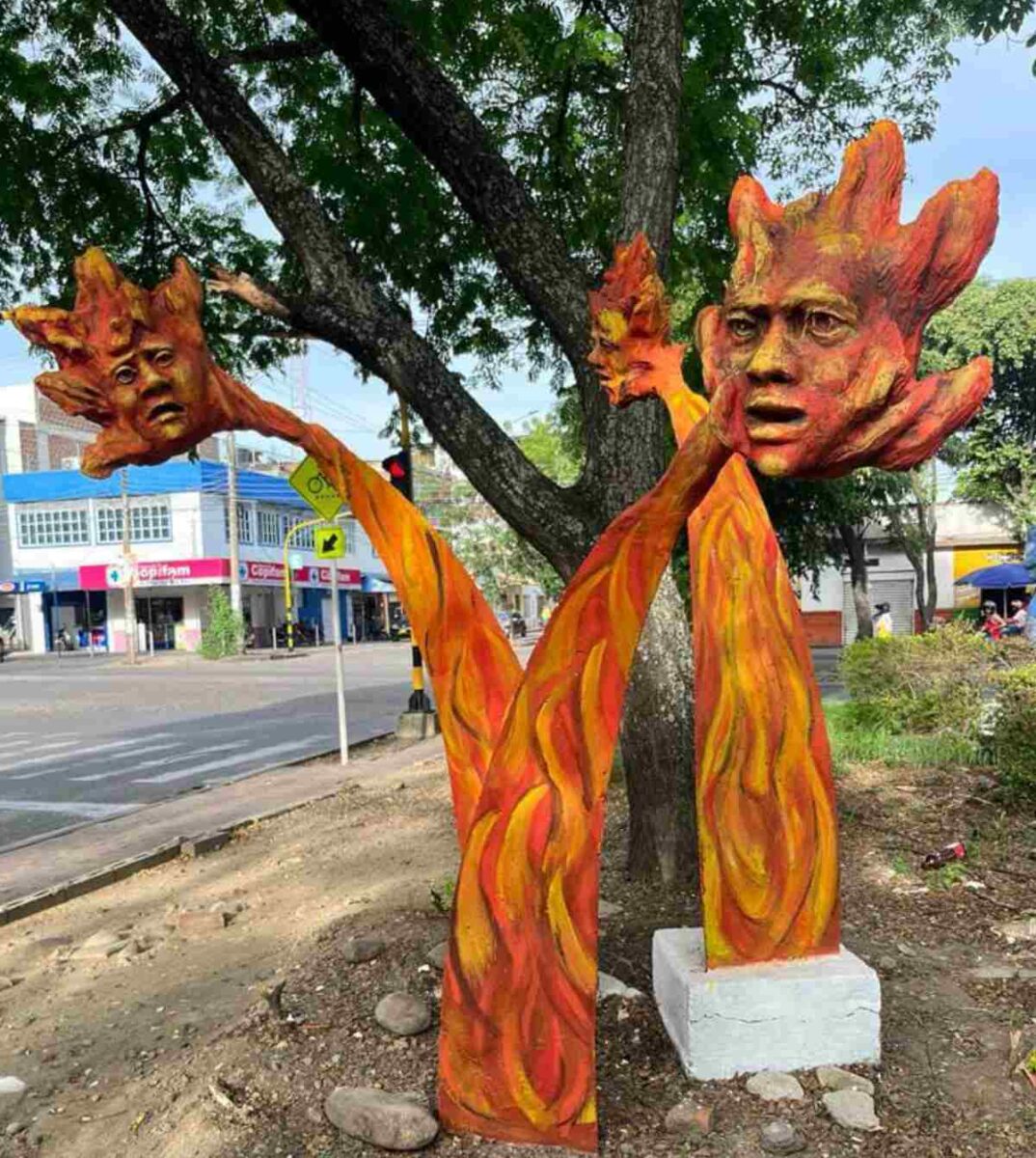
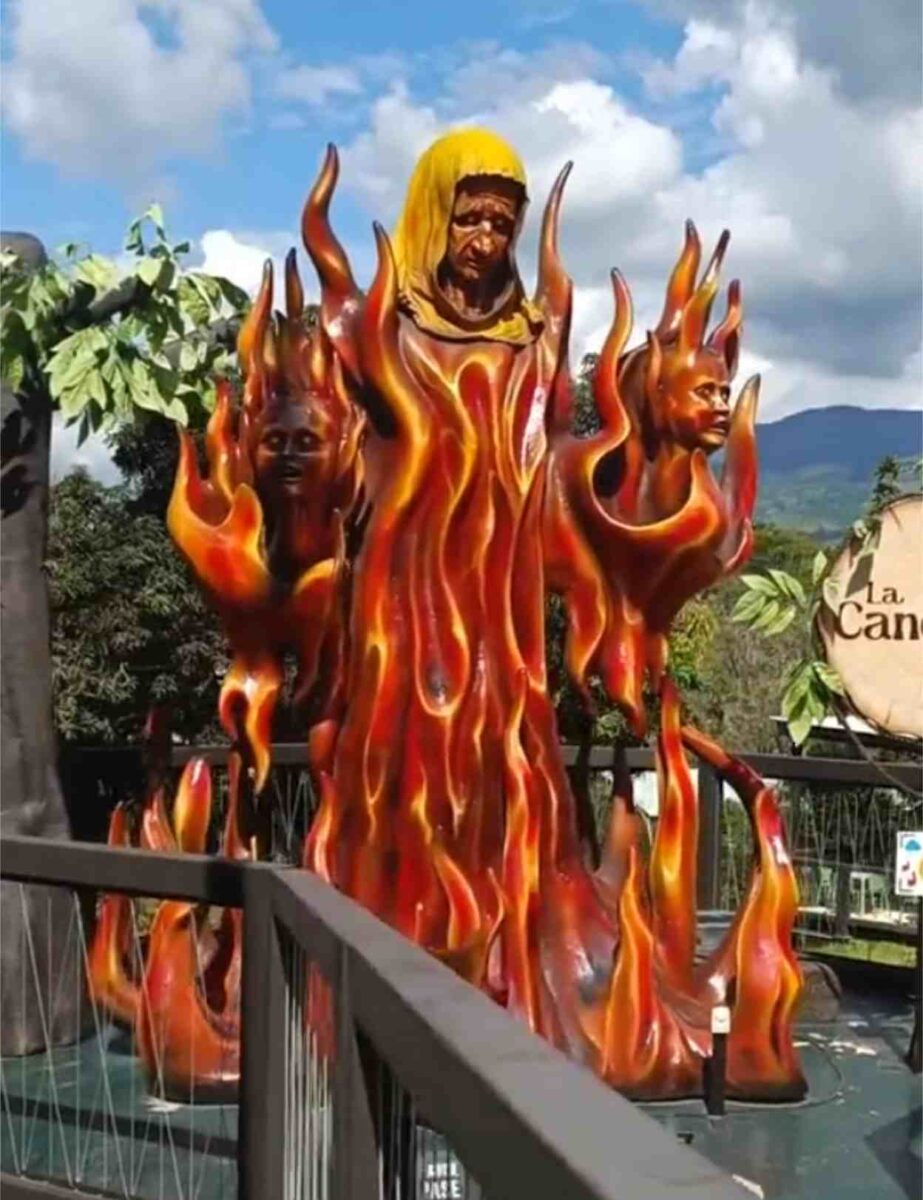
This folklore retains immense cultural relevance today, standing out among the most popular Colombian myths and legends, especially in the Orinoquía region. Its impact is evident in various sculptures and monuments erected in its honor. Furthermore, it appears in musical works such as the song Mito Huilense by Luis Carlos “El Pipa” Prada.
Image gallery of the Candileja



Frequently Asked Questions
Is The Candileja a Myth or a Legend?
The Candileja is classified as a legend because it unfolds within a defined geographical and temporal framework. In addition, the elements making up the story are plausible, suggesting that certain situations could have actually occurred in reality, even if its fantastical details cannot be easily verified.
También te puede interesar
The Legend of Juan Machete: The Fire-Vomiting Phantom of the Colombian Plains
Iraca and Ramiriquí: The Muisca Myth of the Origin of Humans, the Sun, and the Moon
The Whistler: The Most Terrifying Legend of the Eastern Plains
The Legend of The Sayona, the Terror of Unfaithful Men