
UNESCO Declares Ancestral Knowledge of Sierra Nevada Indigenous Peoples an Intangible Cultural Heritage of Humanity
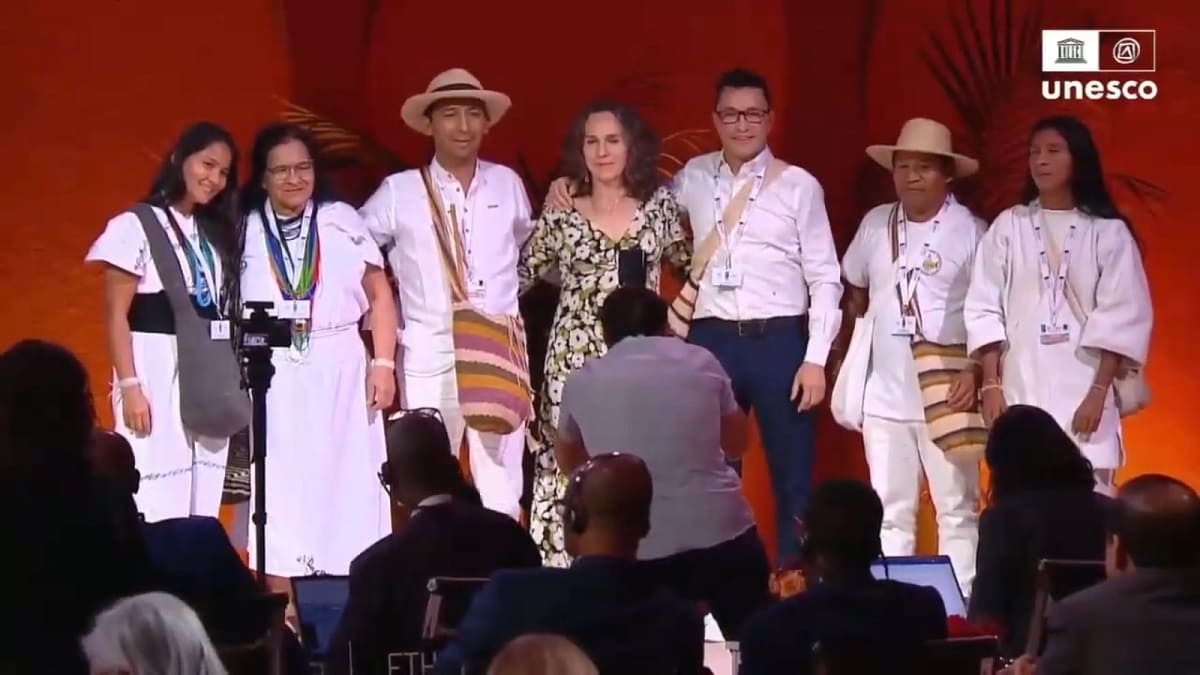
On Tuesday, the United Nations Educational, Scientific and Cultural Organization (UNESCO) recognized the Ancestral Knowledge System of the four indigenous peoples of the Sierra Nevada de Santa Marta—the Kogui, Wiwa, Arhuaco, and Kankuamo—as an Intangible Cultural Heritage of Humanity.
“We celebrate the recognition of the Ancestral Knowledge System of the four indigenous peoples of the Sierra Nevada as an Intangible Cultural Heritage of Humanity. The invaluable legacy of this wisdom, passed down from generation to generation, enables a dialogue between humanity and nature, fosters sustainable coexistence within the Sierra Nevada de Santa Marta ecosystem, and contributes to the protection and safeguarding of the environment both nationally and globally,” highlighted Minister of Culture Patricia Ariza.
The UNESCO announcement was made during the 17th session of the Intergovernmental Committee for the Safeguarding of the Intangible Cultural Heritage, held in the Moroccan capital through December 2.
The Ancestral Knowledge System, which encompasses the sacred mandates sustaining the existence of these four communities in harmony with both the physical and spiritual universe, is rooted in the Law of Origin. This law contains various codes for teaching, learning, and behavior.
In the Sierra Nevada, the Law of Origin is manifested through the ecological calendar, sacred sites, baptism rituals, marriage customs, and offerings made to the spiritual entities embodied in plants and animals.
Likewise, traditional dances serve as additional forms of spiritual communication with the elements of nature, as established by the Law of Origin. This ancestral wisdom plays a crucial role in ensuring the protection of the Sierra Nevada ecosystem, thereby preventing the loss of cultural identity among the four indigenous groups.
Brothers of Nature
Regarding this, Leonor Zalabata, Colombia’s Permanent Representative to the United Nations (UN), explained that “the Law of Origin is a knowledge system that bridges the tangible experience of being human with the intangible spirit that unites us with other living beings, such as plants and animals, which also possess their own spirits.”
The Ambassador further added, “We have the true capacity to recognize ourselves as brothers of nature, rather than seeing ourselves merely as superior to all other life forms on Earth and in the universe.”
The dossier submitted to UNESCO to request inclusion on the Representative List of the Intangible Cultural Heritage of Humanity was developed under the leadership of the four indigenous communities of the Sierra Nevada, with technical support from the Ministry of Culture, the Ministry of Foreign Affairs, and the Government of Magdalena.
It is worth noting that Colombia currently maintains a National Representative List of Intangible Cultural Heritage, comprising 28 cultural practices. Of these, 11 are recognized on UNESCO’s Intangible Cultural Heritage lists and its register of good safeguarding practices.
These recognized traditions include the Cultural Space of San Basilio de Palenque, the Blacks and Whites’ Carnival, Pasto Varnish (Mopa-Mopa), and, as of today, the Ancestral Knowledge System of the four indigenous peoples of the Sierra Nevada de Santa Marta.
You may also be interested
Requirements and Documents from ICA and Airlines for Traveling with Pets by Plane from Colombia
Cartagena Structures the “Transcaribe Acuático” Project to Integrate Bus and Waterway Transport Across the Bay
Mental Health Law 2460: How Schools Are Implementing the Mandate to Promote Emotional Education
Colombia and Argentina Assume Presidency of IBERMEDIA, the Funding Program for Ibero-American Cinema