
Cocido Boyacense: Traditional Andean Root Stew

Cocido Boyacense is one of the most authentic and culturally significant gastronomic showcases of the Cundiboyacense region. This spectacular, heavy stew is famous for utilizing a unique variety of native Andean tubers—some of which are sadly in danger of disappearing entirely. It is the absolute perfect dish for a heavily loaded, energizing lunch.
The secret to this 1-hour and 5-minute recipe is the meticulous layering technique. Because there are so many diverse ingredients (from beef ribs and pork to corn and delicate native tubers), they must be added to the pot in a very specific order—from the longest cooking time to the shortest—allowing everything to simmer perfectly in a warm milk and water broth without turning into mush!
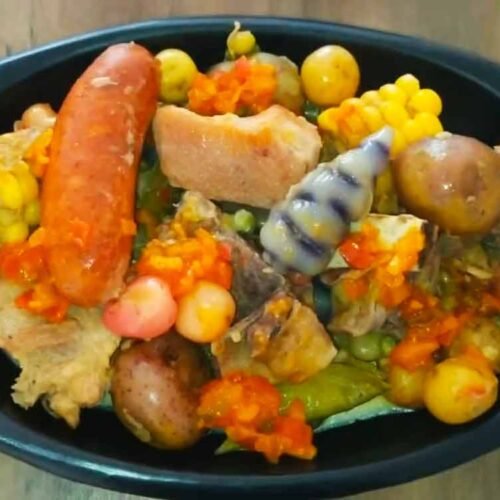
Cocido Boyacense (Traditional Andean Root Stew)
A monumental Colombian stew loaded with meaty beef ribs, pork, longaniza sausage, and a vibrant mix of rare, native Andean tubers!.
Ingredients
- ½ lb Fresh fava beans Habas verdes
- ½ lb Hibias Native Andean tuber
- ½ lb Cubios Native Andean tuber
- ½ lb Chuguas Native Andean tuber
- 1 lb Small potatoes Papas de año or peeled baby potatoes
- 1 lb Meaty beef ribs Costilla de res carnuda
- 1 lb Pork meat or pork belly Carne de cerdo o tocino
- 1 lb Longaniza sausage Cut into large pieces
- 3 Ears of corn Mazorcas, cut into pieces
- ½ lb Tomatoes Chopped, for the hogao topping
- 2 Scallion stalks Green onions, divided for stew and topping
- ½ cup Bulb onion Chopped
- 3 Garlic cloves Minced
- 1 cup Warm milk
- 1 cup Warm water
- 2 tablespoons Oil
- Bay leaf Laurel, to taste
- Thyme Tomillo, to taste
- Oregano To taste
- Salt and Black pepper to taste
Instructions
- Prep the fava beans: The very first step is to thoroughly wash the fresh fava beans (habas verdes), parboil them slightly, and peel off their thick outer skins.
- Build the flavor base: In a very large, heavy-bottomed pot, heat the oil and prepare a rich guiso (base stew) by sautéing the chopped bulb onion, one chopped scallion stalk, thyme, bay leaf, oregano, minced garlic, salt, and pepper.
- Layer the stew: You must now add the ingredients in specific layers, starting from the hardest to the softest. The proper order is: chuguas, chunks of beef ribs, chunks of corn on the cob, potatoes, chunks of pork, hibias, the peeled fava beans, and finally the cubios.
- Simmer: Pour the cup of warm water and the cup of warm milk directly over the layered ingredients. Cover the pot and let it simmer over low heat for 20 to 30 minutes.
- Add the sausage: After the initial simmer, place the chunks of longaniza sausage on top of the stew. Cover again and let it boil for another 20 minutes until all the meats and tubers are completely tender.
- Prepare the topping and serve: While the stew finishes, quickly prepare a fresh hogao (sauce) in a separate pan using the remaining scallion and chopped tomatoes. Serve this magnificent stew piping hot, spreading generous spoonfuls of the hogao directly over the top of the dish!
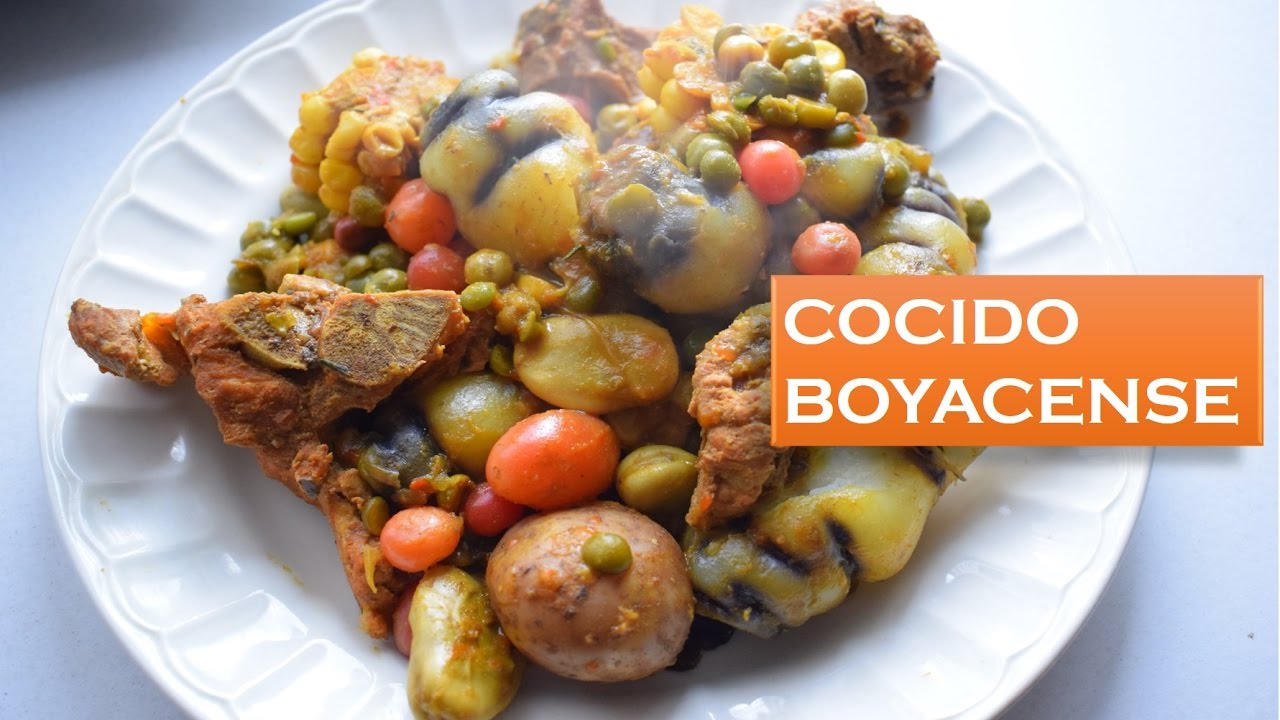
Video
Notes
- Ancestral Cookware: Traditionally, true Cocido Boyacense is cooked in a large clay pot (olla de barro), which imparts an even deeper, earthier flavor to the tubers and meats.
- Historical Origins: This epic dish actually traces its roots back to the Spanish “olla podrida”, which was imported to Colombia during the conquest. That Spanish dish, in turn, originated from the Jewish “adafina” (a slow-cooked stew of chickpeas and lamb). Despite these foreign origins, the massive integration of native, pre-Columbian tubers has transformed it into a dish that is entirely and uniquely Colombian.
- Nutritional Power: Due to the sheer volume and variety of native root vegetables, legumes, and meats used, this stew is considered highly nutritious, providing a massive spectrum of different properties and benefits for the body.
- Meat Variations: While beef, pork, and sausage form the standard holy trinity of this stew, it is not uncommon for some regional variations to also include pieces of chicken!
You may also be interested
Rondón (Rundown): Traditional Colombian Island Seafood Stew
Sancocho trifásico: Traditional Colombian Three-Meat Soup
Sancocho vallenato: Traditional Colombian Beef Rib and Root Vegetable Soup
Sancocho de Guandú: Traditional Colombian Pigeon Pea Soup