
Dulce de Coco con Leche: Colombian Coconut and Milk Fudge
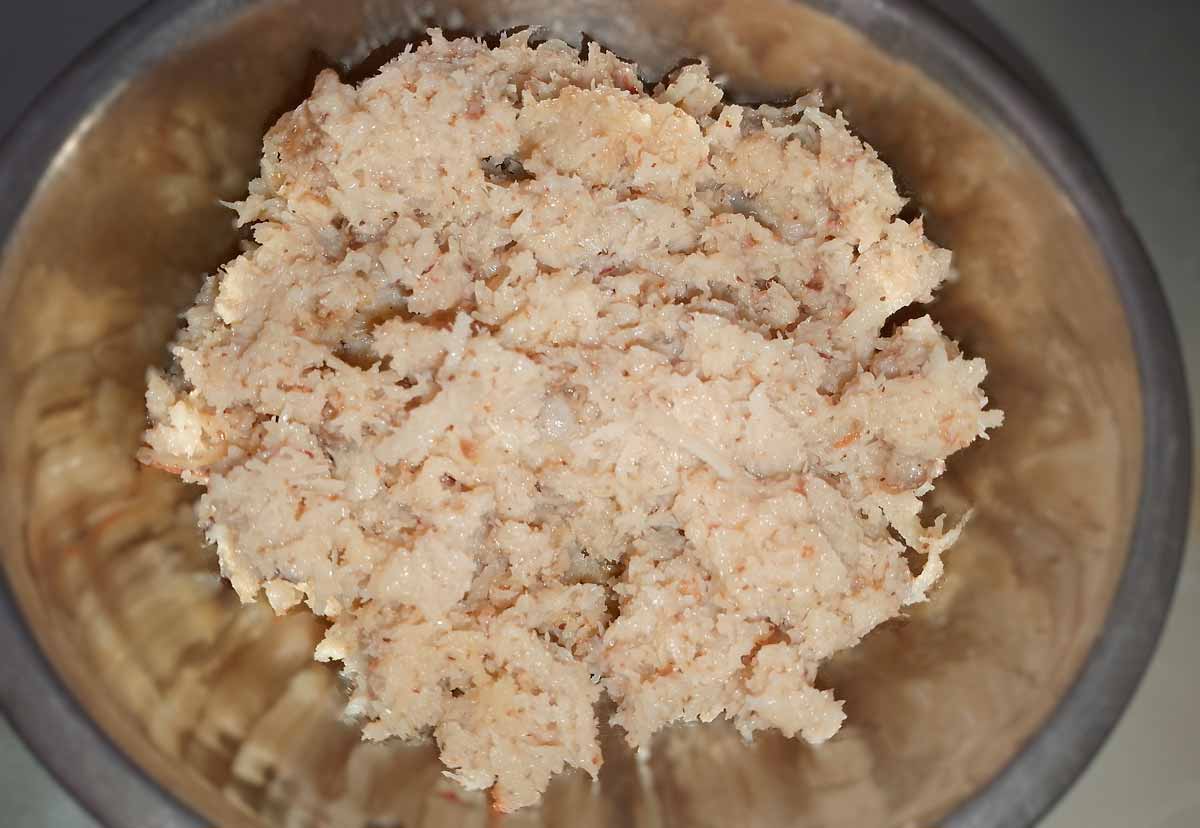
If you want to recreate one of the creamiest, most beloved tropical desserts from the Caribbean coast, this authentic Dulce de Coco con Leche (Colombian Coconut and Milk Fudge) is exactly what you need. While there are many variations of coconut sweets across Latin America, this specific milky version—immensely popular in San Andrés Islands, Cartagena, and Barranquilla—stands out for its rich, melt-in-your-mouth texture. By slowly simmering freshly grated coconut in a bath of whole milk and sugar, the mixture reduces into a sticky, comforting pudding that is completely irresistible.
This recipe takes on a very special meaning during the Colombian Holy Week, a time when families proudly prepare large batches of traditional sweets to share with their neighbors and loved ones. The true chef’s secret to making this dessert perfect is adding just a few drops of fresh lime juice; the subtle acidity beautifully cuts through the rich milk and sugar, ensuring the fudge never becomes cloyingly sweet.
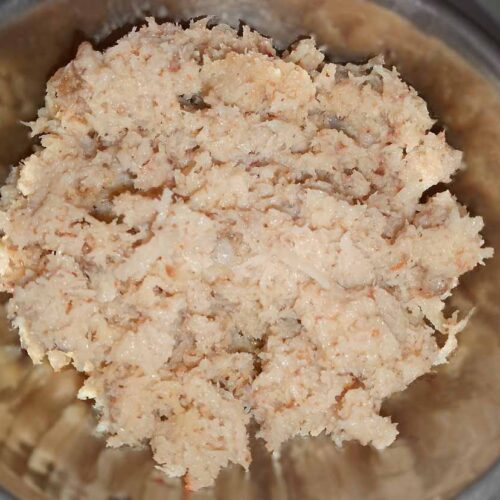
Dulce de Coco con Leche (Colombian Coconut & Milk Sweet)
Ingredients
- 1 Large fresh coconut
- 2 cups Whole milk
- ¼ lb Raisins
- ½ cup White sugar
- 1 Cinnamon stick
- 1 Fresh lime
- 1 teaspoon Vanilla extract optional
- Sweetened condensed milk to taste optional
Instructions
- Extract and clean: Carefully crack open the coconut and extract the firm white meat (pulp). Using a sharp knife or vegetable peeler, completely remove the thin, dark brown skin from the back of the coconut pieces. Wash the white meat thoroughly.
- Grate the coconut: Once the coconut is perfectly clean, grate it. You can use the fine or coarse side of a box grater, depending on whether you prefer a smoother texture or a chunkier bite in your final dessert.
- Combine the base: In a heavy-bottomed pot, pour in the whole milk. Add the grated coconut, raisins, sugar, and the cinnamon stick. Squeeze in just a few drops of fresh lime juice to keep the sweetness perfectly balanced. (If you want an extra layer of richness, you can also stir in the optional vanilla extract and a splash of condensed milk at this stage).
- Simmer and reduce: Place the pot over medium heat and cook for about 30 to 40 minutes. You must stir the mixture constantly with a wooden spoon to prevent the milk and sugars from burning or sticking to the bottom of the pot.
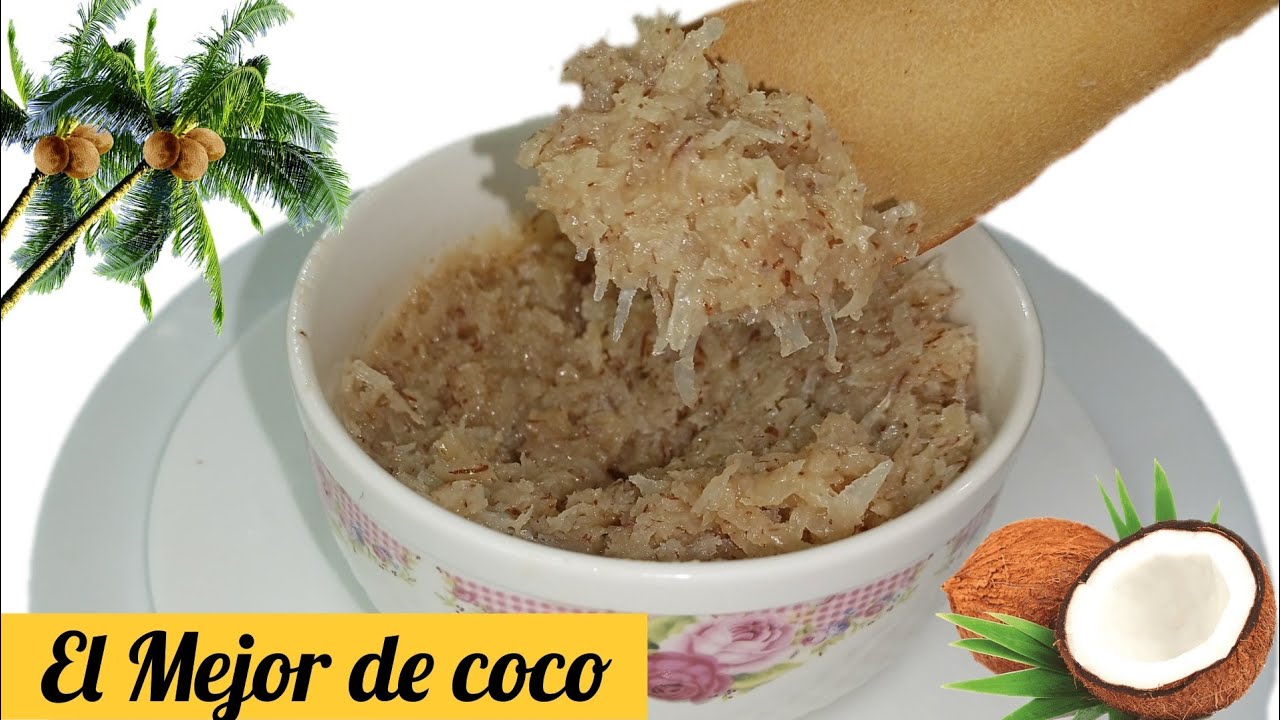
- Cool and set: You will know it is ready when the liquid has significantly reduced and the mixture takes on a thick, sticky, and cohesive consistency. Remove from the heat. You can eat it warm, or transfer it to the refrigerator for a few hours if you prefer a firmer, more solid fudge texture!
Video
Notes
- The Season of Sweets: During Holy Week in Colombia, coastal families dedicate entire days to making various traditional desserts to gift to their communities, making this coconut sweet one of the most highly anticipated treats of the year.
- The Sweet Festivals: The cultural importance of these desserts is huge. Major coastal cities like Cartagena de Indias, Barranquilla, and Montería host massive annual “Festivales del Dulce” (Festivals of Sweets) during Lent. Here, huge cauldrons of coconut, pigeon pea (Guandú), yam (Ñame), potato, and papaya sweets are proudly showcased.
- Texture Customization: The beauty of making this at home is controlling the final texture. For a softer, pudding-like dessert, take it off the heat a few minutes early. For a chewier, candy-like fudge, let it reduce a bit longer!
You may also be interested
Mazamorra de plátano: Sweet Ripe Plantain and Coconut Porridge
Queso de Capa de Mompox: Traditional Layered Mompox Cheese
Ajonjolí Molido: Colombian Toasted Sesame Paste
Dulce de Limón de Mompox: Traditional Candied Mompox Limes