
Nazarenes in Colombia: A Tradition of Faith, Culture, and Mystery
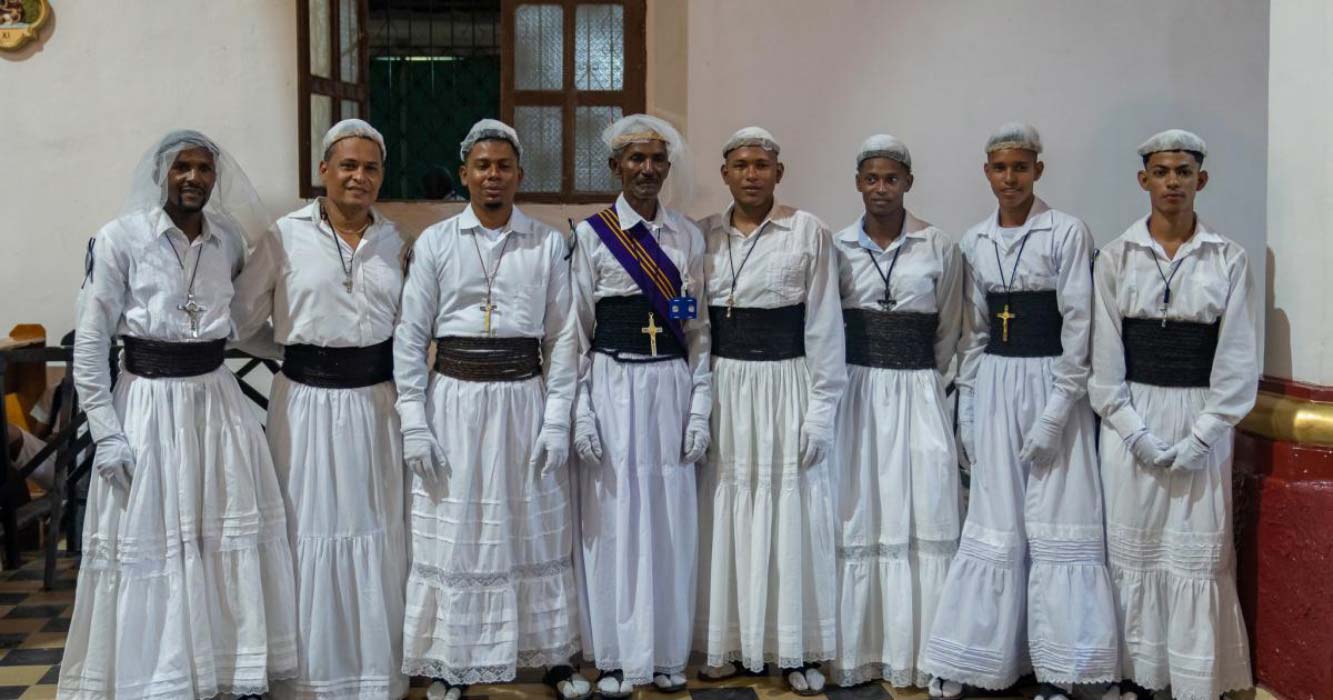
One of the traditions that generates the most curiosity during Holy Week processions in Colombia is that of the Nazarenes. These enigmatic figures, dressed in long tunics, capirotes (conical hoods), veils, and other elements—depending on where the tradition takes place—are a fundamental and unmissable part of the modern celebration of Holy Week.
But how did this tradition emerge in Colombia? We have set out to investigate the origins of these figures, their rites and customs, their history, their legends, and their cultural impact on our society.
The Origin of the Nazarenes
As a Catholic tradition, it is easy to infer that it originated in Europe, specifically in Spain. The Nazarenes emerged during the Middle Ages as part of the religious brotherhoods that organized Holy Week processions, and the custom naturally reached Latin America through colonization.
The term “Nazarene” refers to Jesus of Nazareth. The penitents (the individuals who dress as Nazarenes) adopt this name in homage to Christ and attempt, during their rites, to emulate the Way of the Cross he endured before being crucified.
(Read Also: The Animero: The Legend and the Tradition)
In Colombia, this practice dates back over 480 years, making it one of the oldest religious manifestations in the country and across the Americas. Among the oldest Nazarene brotherhoods is the one in Tunja, with more than four centuries of history. Also notable is the Nazarene Brotherhood of Santiago de Tolú, founded around 1687. Due to its vast cultural wealth, it has been considered on several occasions for the declaration of National Intangible Cultural Heritage; in fact, it is said that the Nazarene tradition in this city is as old as its very founding in 1533.
Vestments and Meaning
One of the most distinctive characteristics of the Nazarenes is their attire. In Colombia, as in Spain, they wear full-body tunics that symbolize penance and humility. The capirote, an elongated cone covering the face, reinforces the idea of anonymity, indicating that the act of penance is strictly between the believer and God, without the need for public recognition.
The colors of the tunics hold specific meanings:
- White: Symbolizes purity and redemption.
- Purple and black: Represent mourning and respect during the holy days. Furthermore, purple is associated with the tunic worn by Jesus during the Way of the Cross.
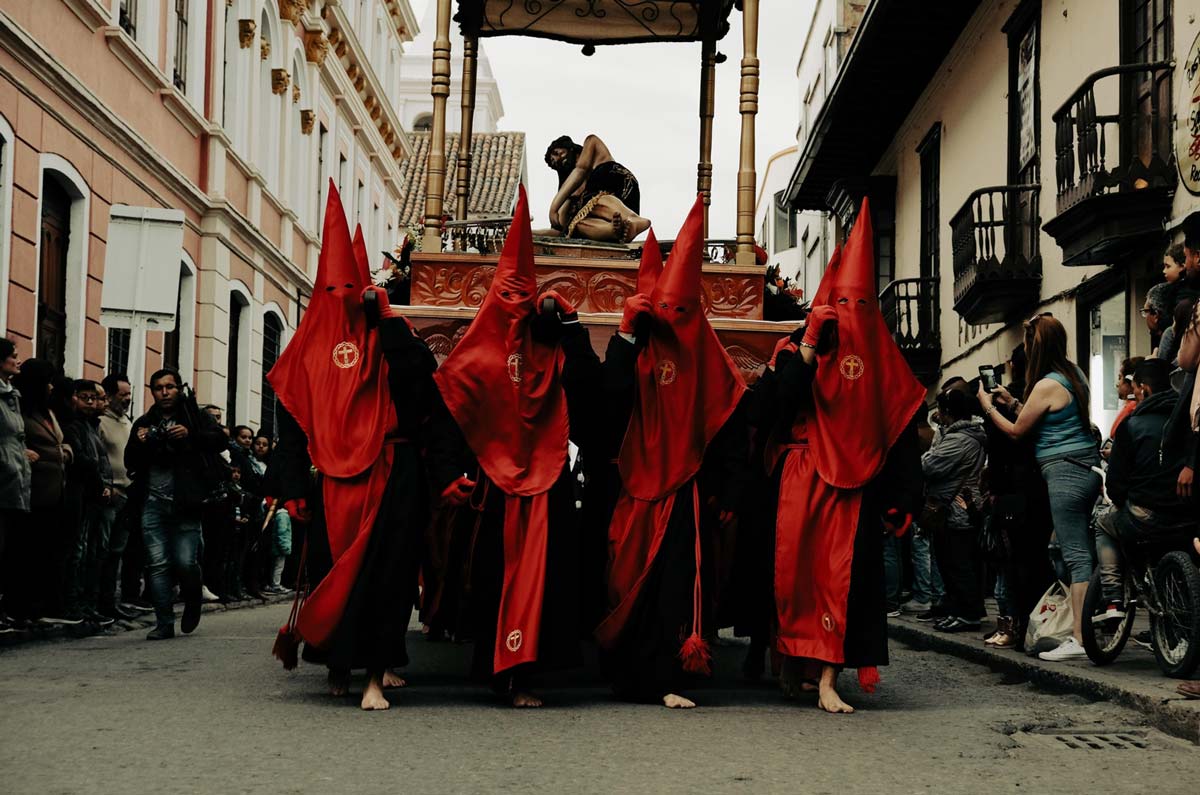
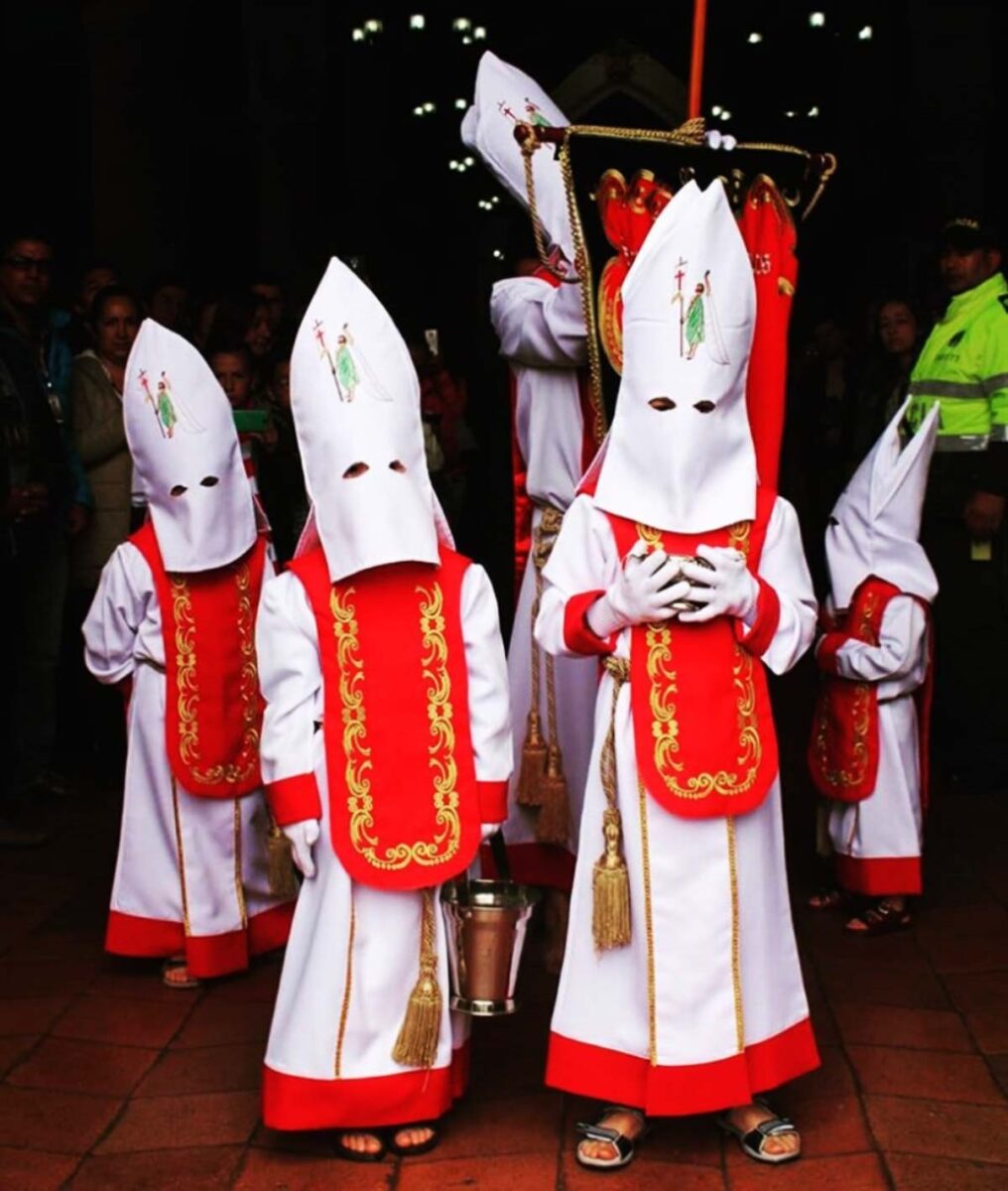
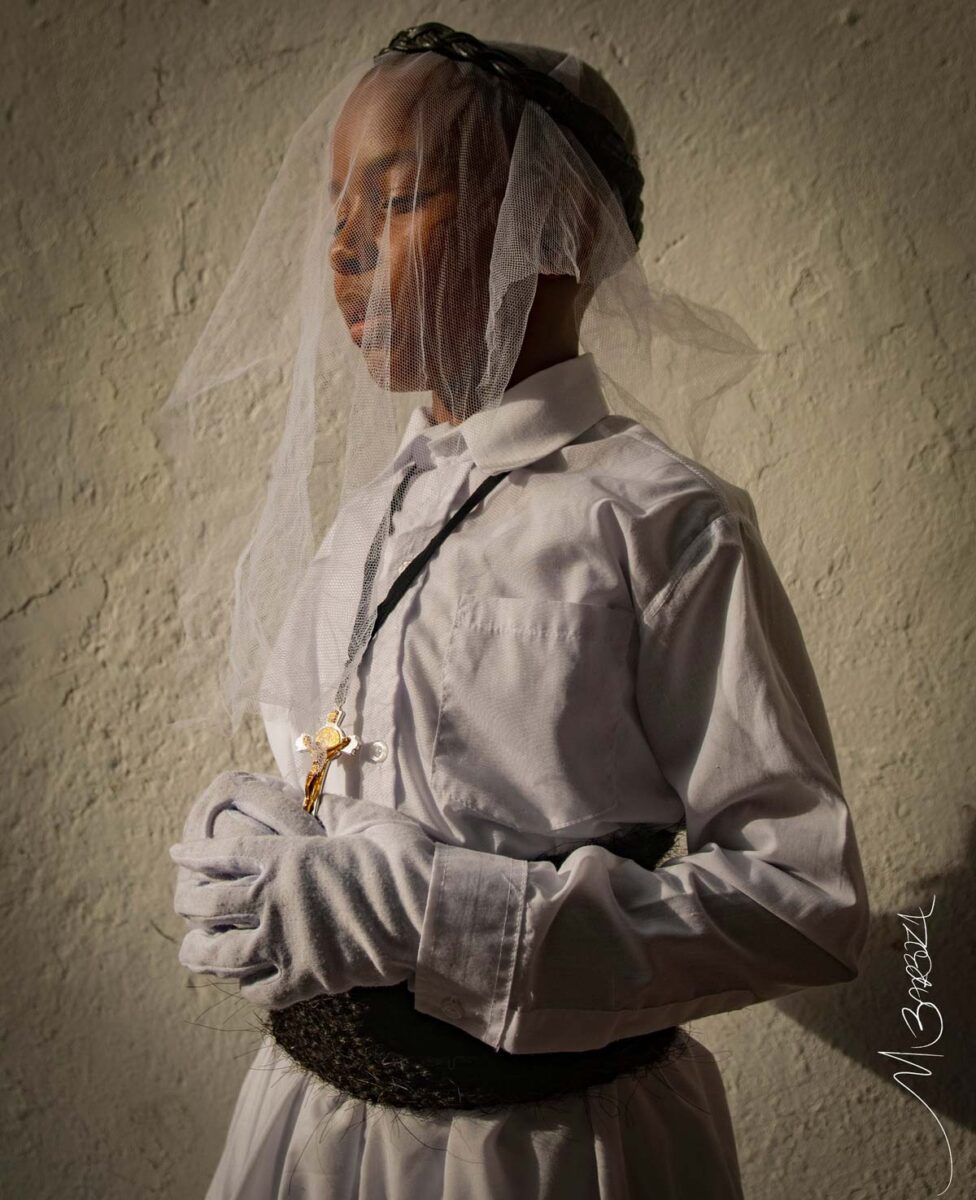
However, in several Colombian municipalities where this ritual is practiced, the wardrobe varies. For example, in Tolú, it is common to forgo the capirote in favor of a short veil over the face. In other regions, local details have been incorporated to give these customs a more distinct, regional identity.
Nazarene Rituals and Processions
Nazarenes play a crucial role in Holy Week processions. They carry heavy crosses and religious figures (known as floats or pasos), walking the Stations of the Cross in acts of devotion and sacrifice.
During Holy Week, many rites are performed to ask for miracles and favors. Some devotees often walk long distances barefoot to fulfill a vow or as a sign of gratitude. Years ago, it was common for the faithful, especially the Nazarenes, to flagellate themselves during these rituals. Today, this practice is frowned upon and rare; consequently, the brotherhoods have chosen to replace these physical penances with long days of prayer.
Given that Colombia is a society with a rich cultural blend resulting from colonization, it is natural that the rites do not remain identical to their Spanish counterparts. For instance, in Mompox, there is a locally created float called the Paso Robado (The Stolen Float). It recounts the curious story of a religious order stealing one of the figures after losing an artistic creation contest. Acts like this demonstrate how these traditions have adapted to their environment, evolving into entirely local manifestations.
Notable Nazarene Brotherhoods
In Colombia, brotherhoods not only organize the celebrations but also keep the traditions alive. Some of the most notable include:
- Nazarene Brotherhood of Tolú: With over 460 years of history, it is a central reference point in the religious celebrations of the Colombian Caribbean.
- Society of Nazarenes of Zipaquirá: Recognized for its elaborate processions and the deep devotion of its members.
- Nazarenes of Tunja: Caretakers of historic floats featuring Quito School and Baroque artistic influences dating back to the 16th century.
- Brotherhood of Valencia de Jesús (Cesar): The oldest religious community in the Cesar department, possessing a strong oral tradition and serving as a cradle of faith for new generations.
These are just a few examples, as there are countless others throughout the country.
Cultural Impact
Holy Week and the Nazarenes are a cultural and tourism driver in Colombia. Cities like Mompox and Tolú welcome thousands of visitors seeking a unique religious and cultural experience. Music, religious art, and local stories enrich these festivities, which transcend their purely liturgical nature to become living heritage.
Myths and Legends
The mysterious appearance of these figures and their ritualistic nature have allowed fantasy to blend into the celebration, fostering the creation of myths and legends around them.
Two of the most famous tales originate in the Caribbean. The first is the legend of The Absent Nazarenes of Tolú, a curious story in which deceased members of the brotherhood return from the afterlife to accompany the living in the procession, completely unnoticed by the latter. The second legend is The Otherworldly Nazarene of Mompox: It is said that the spirit of a Nazarene furiously pursues, and even whips, anyone who fails to keep their word regarding their vows of penance.
Alongside these, other fantastical stories have shrouded the figure of the Nazarene in an aura of mystery.
Colombia is a deeply religious nation that takes pride in preserving and exalting its customs, which is why this tradition remains vibrant today. Oral tradition has allowed our knowledge to persist over time, from Indigenous wisdom to the practices born of cultural exchange with Europe and Africa. Although this exchange may have initially been forced, today it is fully integrated into our identity as a nation and as individuals.