
Tamales Santandereanos: Traditional Colombian Rectangular Tamales
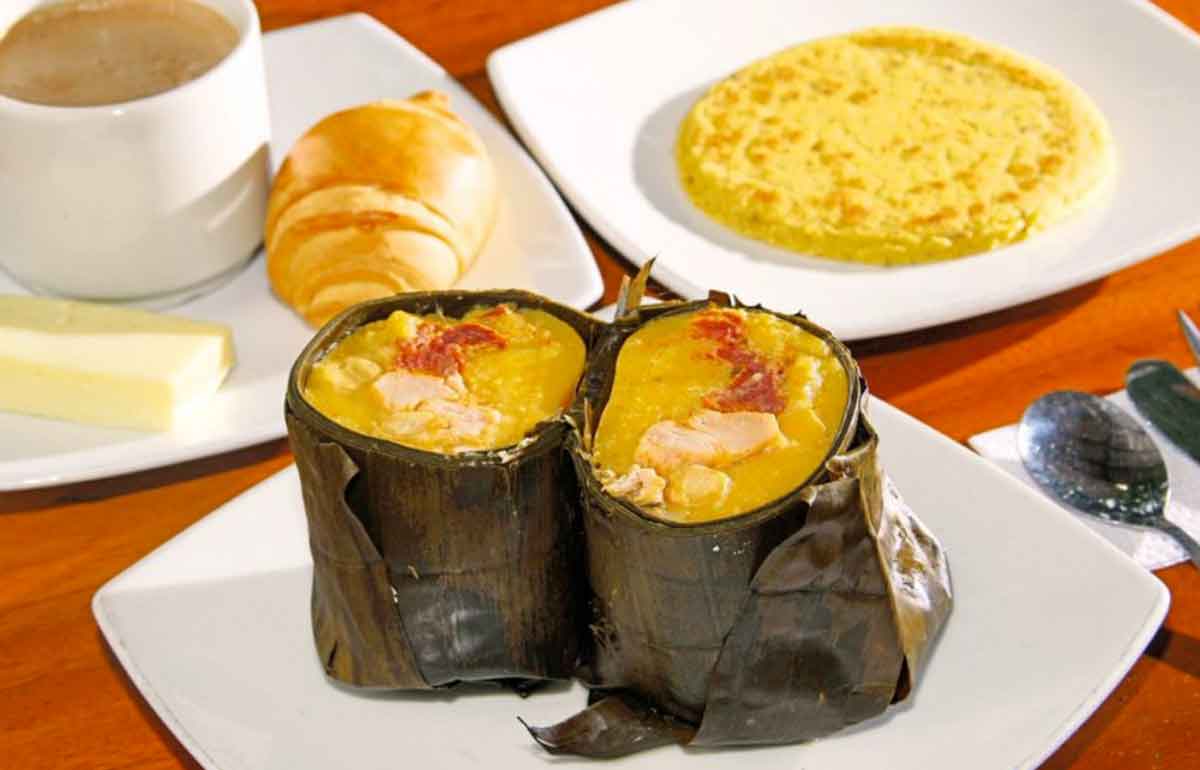
Tamales Santandereanos are a majestic and deeply traditional Colombian delicacy from the northeastern region of Santander. They stand out from all other tamales in the country not only because of their unique rectangular shape but also due to their complex, heavily seasoned filling that features an incredible mix of meats, chickpeas, capers, and raisins.
The secret to this monumental 6-hour and 45-minute recipe is the patience of a two-day preparation. By marinating the meats and soaking the corn overnight, and then slowly steaming the perfectly wrapped rectangular parcels on a bed of plantain leaves, you create a uniquely authentic, melt-in-your-mouth experience that is synonymous with Colombian celebrations!
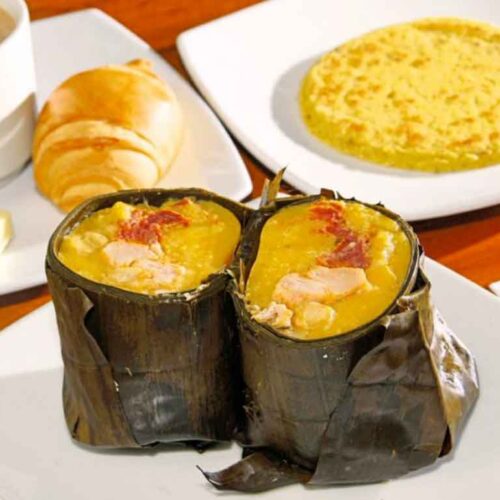
Tamales Santandereanos (Traditional Rectangular Tamales)
A masterpiece of Andean cuisine! A complex, heavily seasoned corn dough stuffed with three meats, chickpeas, capers, and raisins, wrapped in a unique rectangular plantain leaf parcel.
Ingredients
- 1 lb Chicken breast Pechuga de pollo
- 1 lb Pork leg or ham Pernil de cerdo
- 1/2 lb Bacon or pork fat Tocino
- 1 lb Yellow corn Maíz amarillo
- 2 cups Hogao Cold Colombian tomato and scallion sauce
- 1/2 cup Fried and ground pork belly Chicharrón frito y molido
- 1/2 cup Pork lard or cooking oil Manteca de cerdo o aceite
- 1 cup Chickpeas Soaked overnight
- 2 Large bulb onions Red or white, finely chopped
- 2 Scallion stalks Green onions, chopped
- 8 Garlic cloves Minced
- 1 Red bell pepper Cut into strips/batons
- 1/2 cup Seedless raisins
- 1/4 cup Capers Alcaparras
- 1 tablespoon Cumin
- 1 sprig Fresh parsley Finely chopped
- Achiote or color To taste
- Salt and Black pepper to taste
- 10-15 Plantain leaves Roasted/wilted and cut into large squares
- Cooking twine or string Cabuya/pita
Instructions
Day 1: The Preparations
- Prep the corn: Boil the yellow corn. Let it cool, then grind it and strain it with water. Leave this corn mixture soaking in a cool place overnight.
- Marinate the meats: Cut the chicken, pork leg, and bacon into small, bite-sized pieces. Place them in a container and marinate them overnight in the refrigerator using the 2 cups of cold hogao, salt, pepper, minced garlic, and cumin.
Day 2: Cooking & Assembly
- Cook the chickpeas: In a pressure cooker, cook the overnight-soaked chickpeas along with the chopped scallions and a pinch of salt for 45 minutes until tender.
- Prepare the Masa: Carefully drain the excess water from your overnight corn and collect the thick masa (dough). In a large pot, mix this dough with the ground chicharrón, chopped garlic, cumin, salt, achiote (for color), and the pork lard. Cook over medium heat, stirring constantly so it doesn’t stick. (Chef’s Hack: To know if the dough is ready, insert a wet finger into the masa; if it comes out completely clean, it’s perfect!) Remove from heat, cover with a plantain leaf, and set aside.
- Shape the bases: Lay out 10 roasted plantain leaf squares on a table. Form balls with the cooked masa and place one on each leaf. Using another piece of plantain leaf, press down on the balls to flatten them into a hollowed-out arepa shape.
- Add the filling: Into the hollow center of each dough base, add the cooked chickpeas, chopped bulb onions, finely chopped parsley, red bell pepper strips, the marinated chunks of bacon, pork, and chicken, plus the raisins and capers.
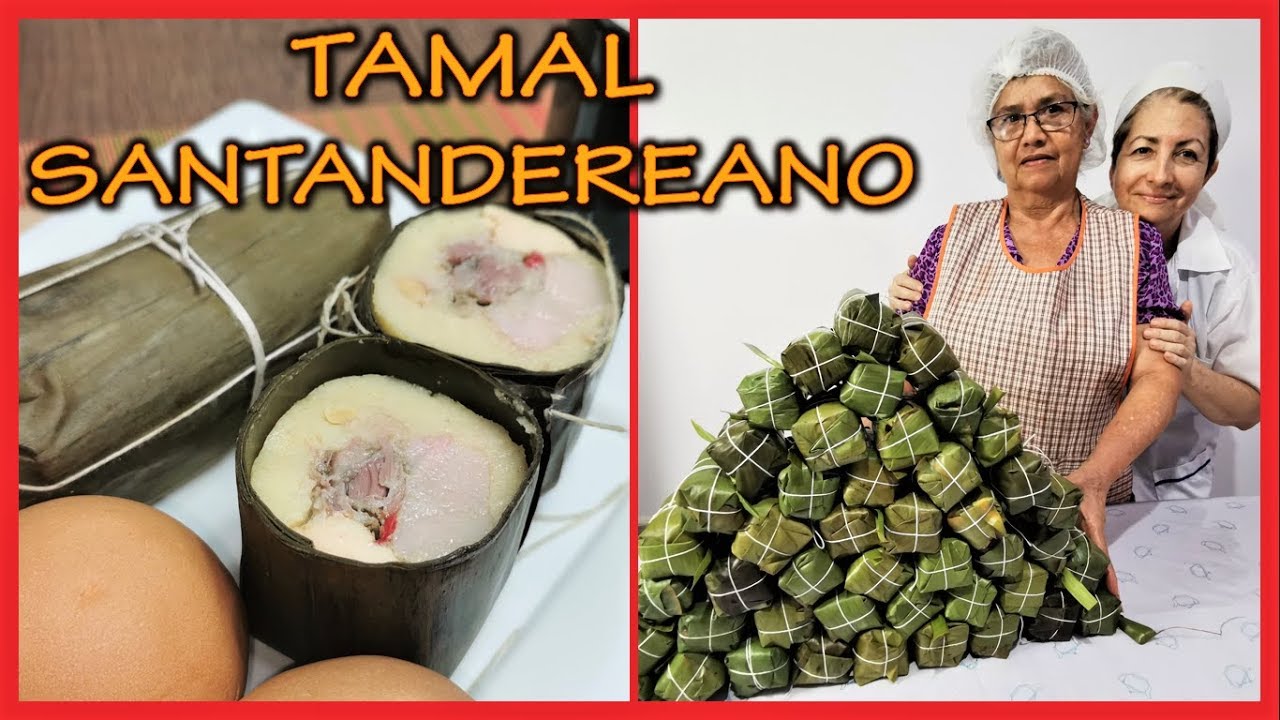
- Wrap and tie: Cover the filling with a little more masa. Fold the plantain leaves over the filling, using your hands to mold them into their signature rectangular shape. Tie them securely with the cooking twine (cabuya) so no water can enter.
- The Steaming Bed: In a massive pot, create a thick "bed" using leftover plantain leaves and thick leaf stems, occupying about 1/4 of the pot's depth. Add water just up to the top of this bed.
- Steam: Arrange the tied tamales on top of the bed (making absolutely sure they do not touch the boiling water directly). Cover the pot tightly and let them steam over medium heat for 4 full hours. (Crucial: Check periodically and carefully pour more boiling water down the sides of the pot as it evaporates).
Video
Notes
- The Corn Shortcut: If you want to save yourself the arduous Day 1 process of boiling, grinding, and soaking raw yellow corn, you can absolutely substitute it with commercial pre-cooked yellow cornmeal (harina de maíz amarillo precocida)!
- A Unique Identity: What truly differentiates the Tamal Santandereano from the famous Tolimense or Bogotano tamales is its distinct, rigid rectangular shape, and the heavy Spanish-influenced inclusion of ingredients like chickpeas, raisins, and capers (or sometimes green olives).
You may also be interested
Pastel de Arroz: Traditional Caribbean Colombian Rice Tamales
Bollo de Yuca: Traditional Colombian Steamed Cassava Rolls
Bollo de Mazorca: Traditional Colombian Steamed Sweet Corn Rolls
Insulso Tolimense: Sweet Colombian Corn Wraps