
Pastel de Arroz: Traditional Caribbean Colombian Rice Tamales
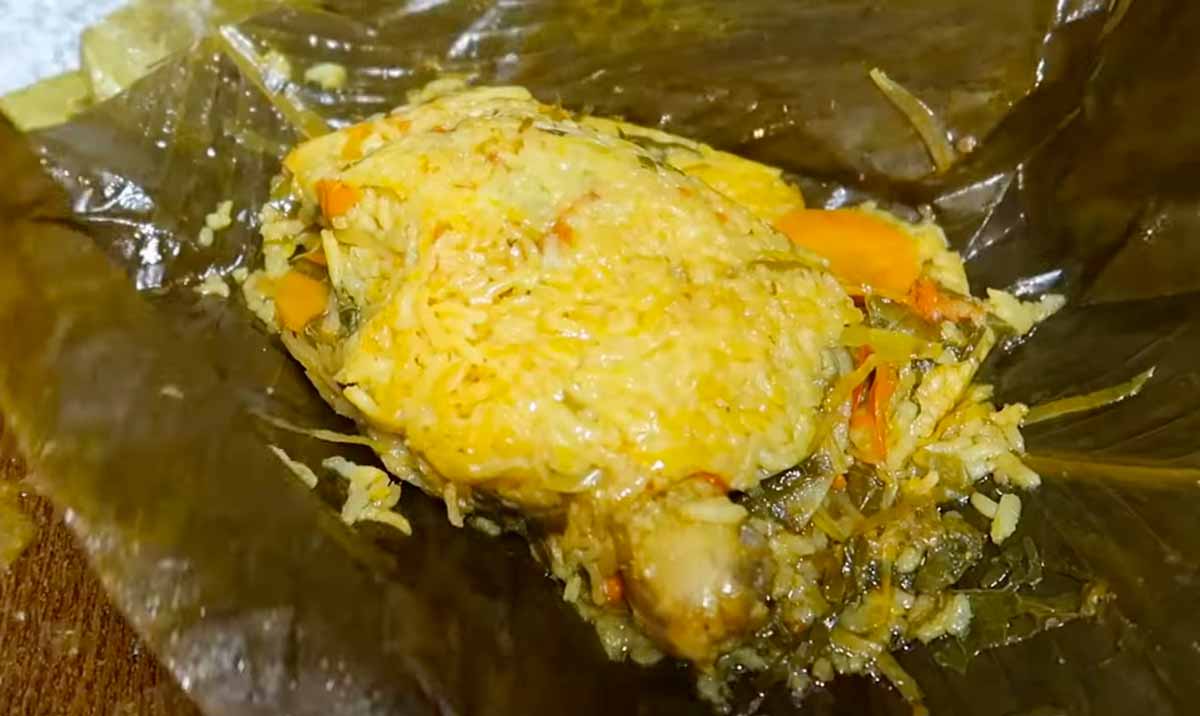
Pastel de Arroz is an absolute monumental masterpiece of Caribbean Colombian gastronomy. While similar in concept to a traditional tamal, this magnificent envuelto completely swaps out the corn dough for a highly seasoned, vibrant bed of rice. Stuffed with a medley of meats and vegetables, and wrapped in aromatic leaves, it is the undisputed, universally beloved dish for Christmas dinners across the coast!
The absolute secret to this 3-hour recipe is the unique preparation of the rice. Instead of cooking the rice beforehand, the raw grains are soaked in vinegar, oil, and achiote, and left to rest out in the hot sun. This sun-marination infuses the rice with an incredible tang and color. Once assembled and tightly wrapped in bijao leaves, the raw rice cooks directly inside the parcel, absorbing all the rich juices from the meats and the hogao.
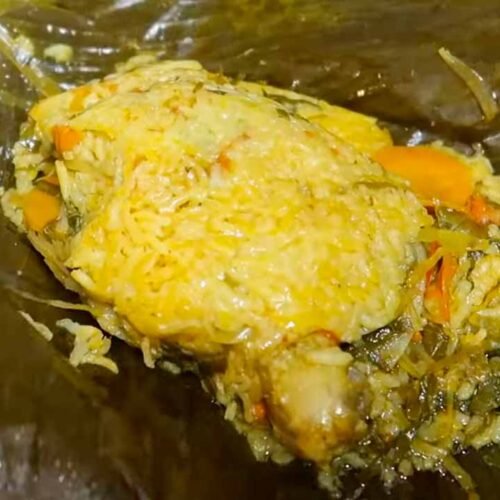
Pastel de Arroz (Caribbean Rice Tamales)
Ingredients
- 4 cups Rice Raw
- 2 ½ lbs Chicken or Hen Cut into small pieces
- 2 lbs Pork ribs Cut into small pieces
- 1 lb Pork belly / Fatback Tocino
- 3 cups Hogao Traditional Colombian tomato and onion sauce
- 1 ½ lbs Potatoes Peeled and sliced
- 2 Ripe tomatoes Peeled and chopped
- 2 Bulb onions Sliced
- 2 Garlic cloves Crushed
- 2 Sweet peppers Ajíes dulces, chopped
- 10 Cabbage leaves Hojas de col o repollo
- 1 small jar Capers Optional
- 1/4 cup Vinegar Divided
- 2 tablespoons Cooking oil
- Achiote or natural food coloring To taste
- Salt to taste
- Black pepper to taste
- Hojas de bijao or Plantain leaves For wrapping
- Cooking twine / String Pita o cordel
Instructions
- Sun-marinate the rice: The very first and most crucial step is to mix the raw, washed rice with a splash of vinegar, the cooking oil, salt, black pepper, and the achiote for color. Mix it thoroughly and leave it resting outdoors under the hot sun for several hours, stirring it occasionally.
- Pre-cook the meats: In a large pot over low heat, place the small pieces of pork ribs and the chicken/hen. Add just enough water to gently boil them until the meats soften slightly. Set aside.
- Prep the veggies: In a separate pot, pre-cook the potatoes until they are tender. Ensure your 10 cabbage leaves are washed and ready.
- Assemble the Pasteles: Take your bijao (or plantain) leaves and arrange them in a cross shape. Right in the center, place a small bed of the sun-marinated rice. Top the rice with pieces of the cooked pork and chicken, the sliced potatoes, onion rings, chopped tomatoes, crushed garlic, ajíes dulces, and a few capers.
- Seal the parcel: Cover the meat and vegetable filling with another layer of the marinated rice. Place one large cabbage leaf over the top mound, and generously bathe the entire mound with the hogao and a little bit of the broth from the cooked meats. Carefully fold the bijao leaves up and over to form a tight, square parcel.
- Tie and boil: Tie the parcel securely using the cooking twine (pita). In a massive pot, create a "bed" at the bottom using leftover leaves and stems to prevent burning. Place the tied pasteles inside, fill the pot with enough water to completely submerge them, and add a heavy splash of vinegar and salt to the boiling water.
- The long cook: Boil over high heat for the first 20 minutes. Then, lower the heat to medium and let them cook undisturbed for another 1 ½ to 2 hours. (Crucial: Keep an eye on the water level; add hot water if it evaporates too much!) Remove, let them drain and rest slightly, unwrap, and serve the feast!
Notes
- The Cartagena Festival: This dish is so deeply revered in our city that Cartagena de Indias has hosted the massively popular “Festival del Pastel” every December since 1987! It is officially recognized as part of the city’s immaterial cultural heritage.
- Historical Origins: Historians trace the origins of the Cartagena-style pastel de arroz all the way back to the colonial era during slavery. Enslaved people would take the leftover food gifted to them during the Christmas season and wrap it in bijao leaves (a technique learned from the indigenous populations) to preserve it for longer periods.
- Endless Customization: While this is the standard base, families across the coast fiercely debate the “perfect” additions. Many households add green beans, carrots, eggplants, olives, chickpeas, or even hard-boiled eggs!
You may also be interested
Bollo de Yuca: Traditional Colombian Steamed Cassava Rolls
Bollo de Mazorca: Traditional Colombian Steamed Sweet Corn Rolls
Tamales Santandereanos: Traditional Colombian Rectangular Tamales
Insulso Tolimense: Sweet Colombian Corn Wraps