
Solid Waste: From the Beaches of Manzanillo to Art Galleries in Cartagena
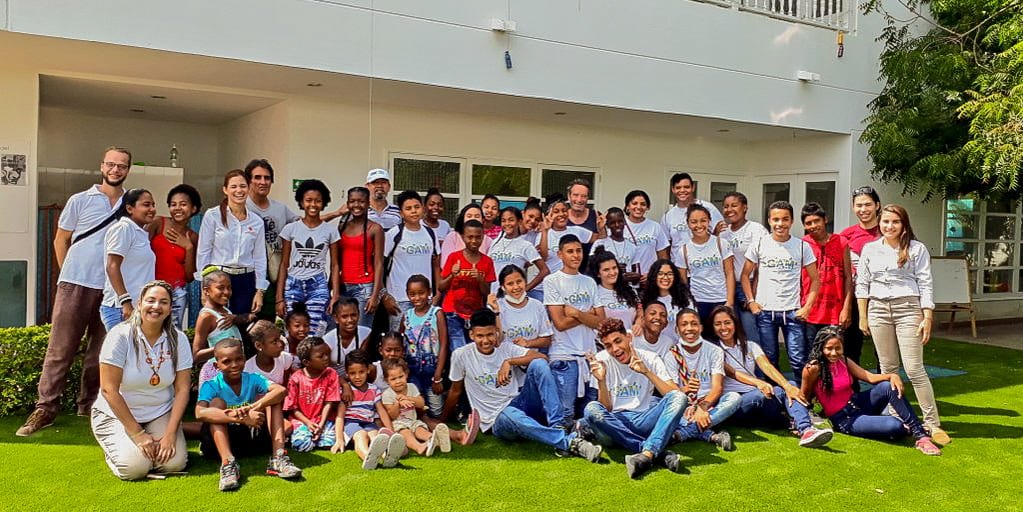
Recently, an awareness, cleanup, and solid waste collection initiative took place on the beaches of Manzanillo del Mar. The activity involved young people from the ExpreArte and Atrévete a Ser Líder (Dare to Be a Leader) programs of the Serena del Mar Foundation, as well as volunteers from the Multiplying Environmental Guardians program of the Planeta Azul Caribe Foundation.
Both organizations brought together 50 children and adolescents, who collected 24 kilograms of waste. This trash was then transformed into an exhibition cube by Swiss artist Harald Reichenbach.
Reichenbach is the creator of G-Cubes, a creative project with socio-environmental and artistic goals. It draws attention to the pollution of water sources and proposes an innovative solution to this problem so that, in the words of the Bern native, “waste becomes useful again for the polluters.”
The artwork is part of the Navegando por Cartagena (Navigating Cartagena) project by the G-Cubes Society Organization. It was exhibited at the La Presentación Art and Culture Museum and the Bolívar University Institution of Fine Arts and Sciences.
“The main contribution of this activity is being able to show our children and young people what awareness and willpower can achieve. Creating a culture that promotes the responsible use of natural resources is one of our primary focuses as a Foundation. In this regard, we will continue to join forces with other social and environmental advocates to help us transform minds and habits,” stated Isabel Mathieu, Manager of the Serena del Mar Foundation.
For his part, Luis Fernando Sánchez Rubio, Director of the Planeta Azul Caribe Foundation, noted:
“We participated in the cleanup initiative with the goal of exchanging experiences with the youth of Manzanillo del Mar. We presented our TRIAD Model, which seeks equity in Cartagena by shifting the paradigm from wealth-centered development to sustainable development. This focuses on valuing urban mangroves as environmental assets and ecosystem services for local communities.”
You may also be interested
Requirements and Documents from ICA and Airlines for Traveling with Pets by Plane from Colombia
Cartagena Structures the “Transcaribe Acuático” Project to Integrate Bus and Waterway Transport Across the Bay
Mental Health Law 2460: How Schools Are Implementing the Mandate to Promote Emotional Education
Colombia and Argentina Assume Presidency of IBERMEDIA, the Funding Program for Ibero-American Cinema