
Mañoco o Fariña: Indigenous Granulated Cassava
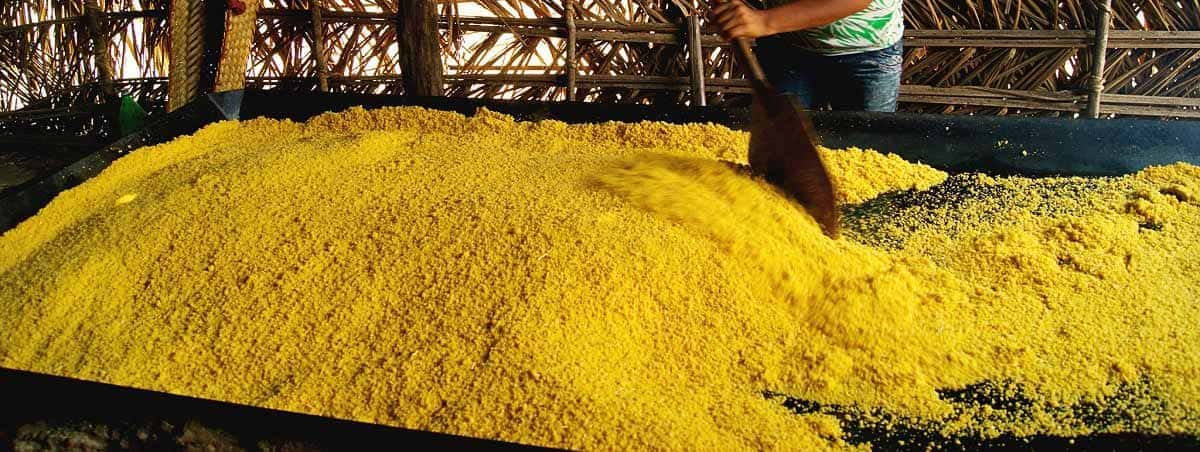
Mañoco, also widely known as fariña, is an ancient, granulated cassava flour that forms the backbone of indigenous diets across the eastern plains of Colombia. This versatile, gluten-free staple offers a rustic, earthy flavor and a unique crunchy texture that can be enjoyed as a hearty side dish or mixed into comforting beverages.
The secret to this traditional 5-day recipe is the meticulous fermentation and pressing process required to safely prepare bitter cassava. By utilizing woven extraction tools to press out the natural toxins, followed by a slow, continuous toasting on a hot clay griddle, the raw root is transformed into a safe, nourishing, and incredibly long-lasting ingredient.
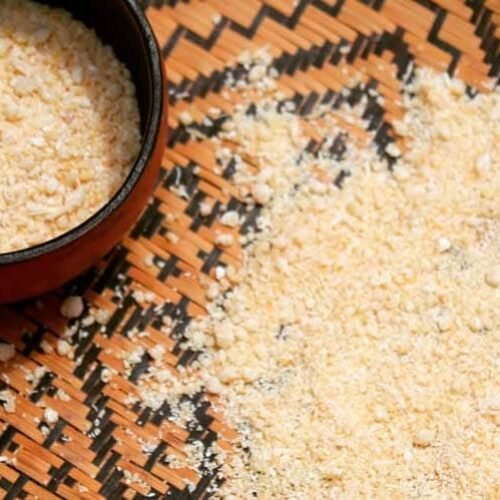
Mañoco o Fariña (Indigenous Granulated Cassava)
A traditional, long-lasting granulated flour made from fermented and toasted bitter cassava, native to the Colombian plains.
Ingredients
- 3 kg Bitter cassava
- Water
Instructions
- Harvest and soak: Harvest or acquire the bitter cassava roots, brushing off any excess dirt. Submerge the whole, unpeeled roots in a large container of clean water and allow them to soak undisturbed for three days to begin the natural fermentation and softening process.
- Peel and grate: After three days, thoroughly scrape the tough skin off the softened cassava using a heavy knife. Wash the peeled roots and grate them completely into a coarse mash. (Note: Traditional methods often fold in a small amount of previously grated, fermented cassava at this stage to act as a starter culture).
- Ferment the mash: Cover the freshly grated cassava mash and let it rest and ferment for an additional two days. This crucial step further breaks down the complex starches and develops its signature tangy flavor profile.
- Press and extract: Transfer the fermented mash into a traditional woven pressing sleeve (sebucán) or a heavy-duty cheesecloth. Squeeze and twist vigorously to extract all the natural liquids and toxic cyanide juices (yuré), ensuring the remaining pulp is remarkably dry.
- Pound and crumble: Remove the dry, compressed cassava block from your pressing cloth. Using a heavy mortar, pestle, or pounding stone, smash the dried mass until it breaks down completely into a coarse, crumbly meal.
- Toast to granulate: Transfer the crumbled flour to a traditional flat clay griddle (budare) or a large, heavy-bottomed skillet over medium heat. Toast the flour continuously for about an hour, stirring constantly so it dries out evenly without burning, resulting in the iconic, crunchy mañoco granules.
Notes
- Nutritional Benefits: Bitter cassava is naturally free of fat and gluten, while providing an excellent source of dietary fiber and essential B-complex vitamins.
- Casabe vs. Mañoco: The most vital difference between fariña (mañoco) and traditional casabe is the final texture. While casabe is pressed and baked into a large, flat solid cake, mañoco must be continuously stirred during cooking to keep it granulated and loose.
- Incredible Shelf Life: Because all moisture is thoroughly extracted and toasted away, this indigenous staple boasts an incredibly long shelf life, resisting spoilage for extended periods even in hot, humid climates.
- Versatile Consumption: Mañoco can be enjoyed as a crunchy topping for savory stews, eaten completely on its own, or prepared like a breakfast cereal by mixing it with cold water or fresh fruit juices.
- Ancient Subsistence: Both Mañoco and Casabe stand as millennial culinary pillars, having allowed the survival and flourishing of countless indigenous communities across the Americas for centuries.
You may also be interested
Casabe: Traditional Indigenous Cassava Flatbread
Colombian Dumplings o Drop Dumplings
Arepas de fruto del árbol de pan: Colombian Breadfruit Arepas
Bami: Traditional Colombian Island Cassava Flatbread