
Typical Colombian sweet recipes for Holy Week
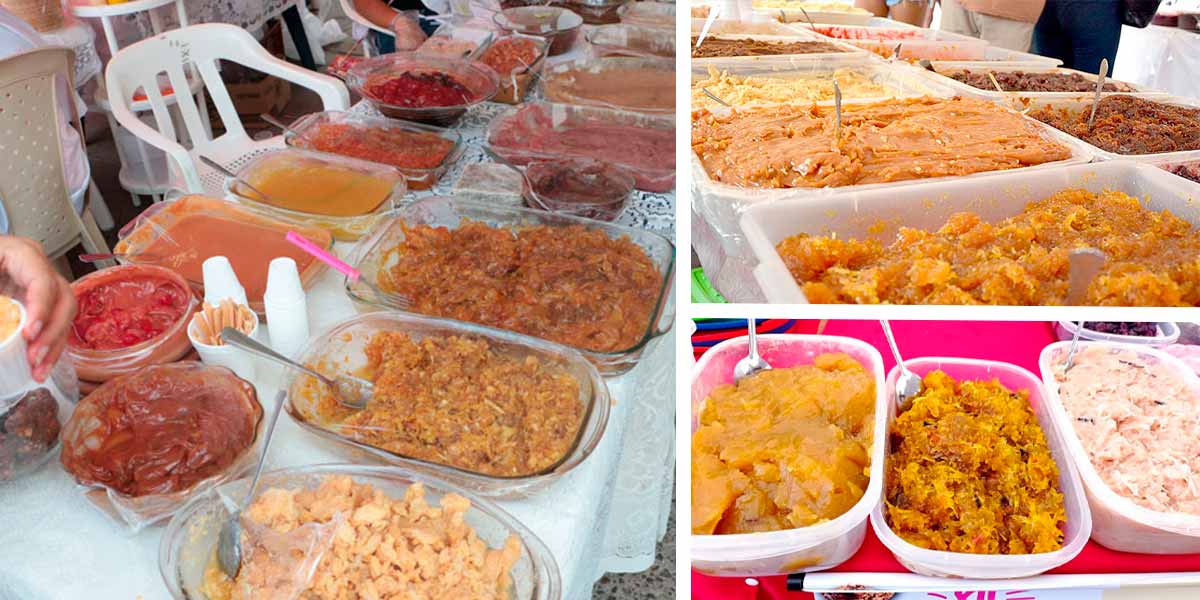
Sweets are one of the great protagonists of Holy Week (Semana Santa) in Colombia. These delicious treats, made from fruits and other ingredients, are very popular during this season, especially on the country’s Coast.
(Click here to skip to the recipe list)
Here we will show you which are the typical Colombian sweets that are most consumed during this celebration, so you can experience how Holy Week is lived in the coffee country.
Preparing and sharing sweets among friends and family is one of the most beautiful traditions of Holy Week in Colombia. During this period of religious reflection, families usually eat mostly fish and seafood, but sweets have become a perfect replacement for the red meat that is no longer consumed during this time.
(Read also: 10 fish recipes for Holy Week)
This is a tradition spread throughout Colombia, and in each region all kinds of delicious and different sweets and desserts are prepared, but those from the Caribbean Coast are the most famous. In cities like Cartagena, Barranquilla, Santa Marta, Riohacha, and other areas of the Caribbean, mango, papaya, yam (ñame), cocoplum (icaco), coconut, and pigeon pea (guandul) sweets, among many others, take over the kitchens of homes to celebrate as a family.
It should be noted that, for the people from the coast (costeños), sweets occupy a fundamental place in their gastronomy, which is why they are consumed quite a bit throughout the year. For example, one of the most iconic corners of Cartagena is the Portal of Sweets (Portal de los Dulces); we can also find many of these delicacies brought by the palenqueras (Afro-Colombian women who traditionally sell fruits and sweets in traditional dresses), or in street stalls in the parks of Barranquilla and other Colombian cities.
(Read also: What is eaten in each region of Colombia during Holy Week?)
However, it is during this season when the immense variety of the region’s desserts truly shines through various fairs and festivals.
Typical Colombian sweet recipes for Holy Week:
Below you will find a list with the most popular typical sweet recipes to celebrate Holy Week in the best Colombian style.
Dulce de Guandú (Pigeon pea sweet)
The dulce de guandul is probably the most popular during this time. Although it is delicious, its preparation is usually somewhat time-consuming.

Ingredients:
- 3 pounds of guandul (Pigeon peas)
- 800 g of sugar
- 3 liters of whole milk
- Water
- Cloves (Clavos de olor)
- Cinnamon
- Coconut
Preparation: Soak the 3 pounds of guandul from the day before. Rinse it a couple of times with clean water, take it to a large pot, and cook it over high heat in water that covers it for 1 hour and a half. Then, take it to the blender so it is finely crushed; pass it through a strainer, pour it back into a pot, and place it to cook over high heat. Separately, in a small pot, boil the cinnamon and cloves in water for about 3 minutes; add them to the sweet, passing them through a strainer first. Mix and add 500 g of sugar and the milk. This sweet is very delicate, so you must mix it continuously for about 3 hours to prevent it from burning. With 1 hour left to finish, add the coconut cut into small pieces and keep mixing until, when passing the spoon, the bottom of the heavy pot (caldero) is easily left clean.
Dulce de Ñame (Yam sweet paste)
Another favorite during Holy Week is the dulce de ñame, with its delicious flavor and creamy texture.

Ingredients:
- 1 ñame (Yam, a starchy white root vegetable)
- 1 liter of water
- Cinnamon sticks (Astillas de canela)
- 2 liters of whole milk
- 1 cup of sugar
Preparation: The first thing you will do is peel the ñame; then wash it and cut it into small squares. Put it to cook in a pot with 1 liter of water and the cinnamon sticks; let it cook for about 15 minutes. After this time, begin to mix with a wooden spoon for a while until you notice it is somewhat thick. Turn off the heat for a moment and, with the spoon, crush the large lumps that remained; then turn the heat back on. Once everything is well crushed, add the milk proportionately. Mix and, after a while, add the sugar. Continue cooking and mixing without stopping for 1 more hour, until it has a creamy texture.

Dulce de Coco (Coconut sweet)
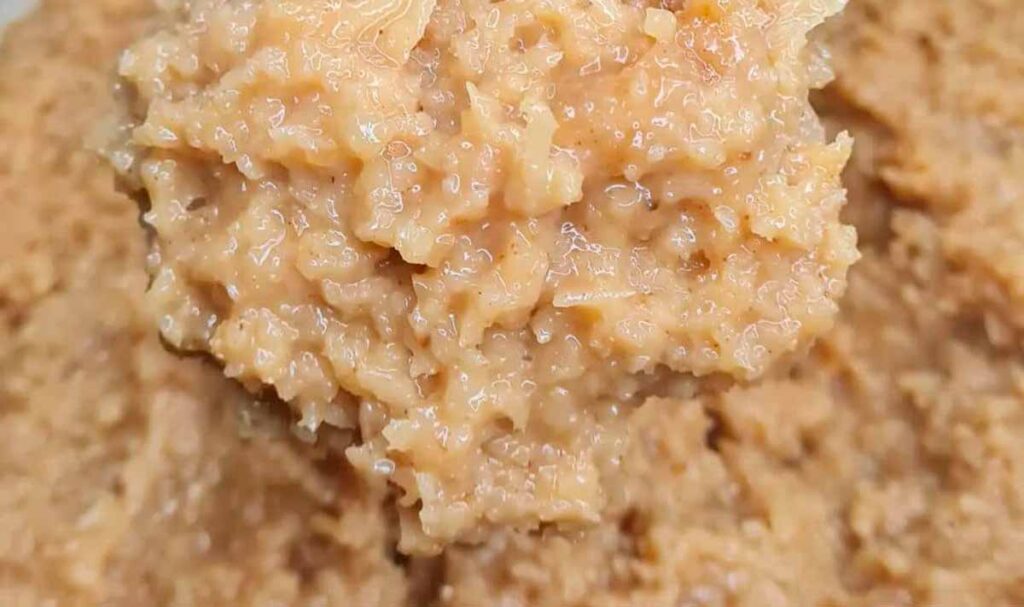
One of the most traditional is the dulce de coco; with its flavor, it has conquered everyone who tries it.
Ingredients:
- 1 pound of grated coconut
- ¾ of brown sugar
- 750 ml of milk
- 3 cinnamon sticks
- 1 tablespoon of black vanilla
- 750 ml of water
- 1 pinch of salt
Preparation: In a heavy pot (caldero), place the grated coconut, add the water, and bring to a boil until the liquid is consumed. While it boils, add the cinnamon and a pinch of salt. Stir constantly; add 1 tablespoon of vanilla and continue moving until the water dries up. When it has completely dried, add the milk and the sugar. Stir very well and continue moving constantly until the milk reduces and dries.
Dulce de Mango (Green mango jam)
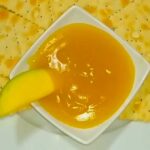
The green mango sweet, with its unique flavor, has become another of the traditional Holy Week treats. It is perfect to spread and enjoy with other foods, like saltine crackers.

Ingredients:
- 3 green mangos
- 250 grams of sugar
- Half a lemon
- Cinnamon stick
- Water
Preparation: Peel all the mangos and chop them into medium pieces. Take them to a pot with water to cover them and put them to cook until they are soft; if you can mash them easily, they are ready. Take them off the heat, let them cool, and take them to a blender. After blending them, pass them through a strainer. Take the resulting liquid back to the heat, add the sugar, the cinnamon stick, and the juice of half a lemon. Mix very well and let it reduce; every five minutes you must stir so it doesn’t stick. When it starts to boil, you must stir non-stop to prevent it from burning. You will know it is ready when, upon passing the spoon, the bottom of the pot can be easily seen.
Dulce de leche o arequipe (Caramel-like milk sweet)
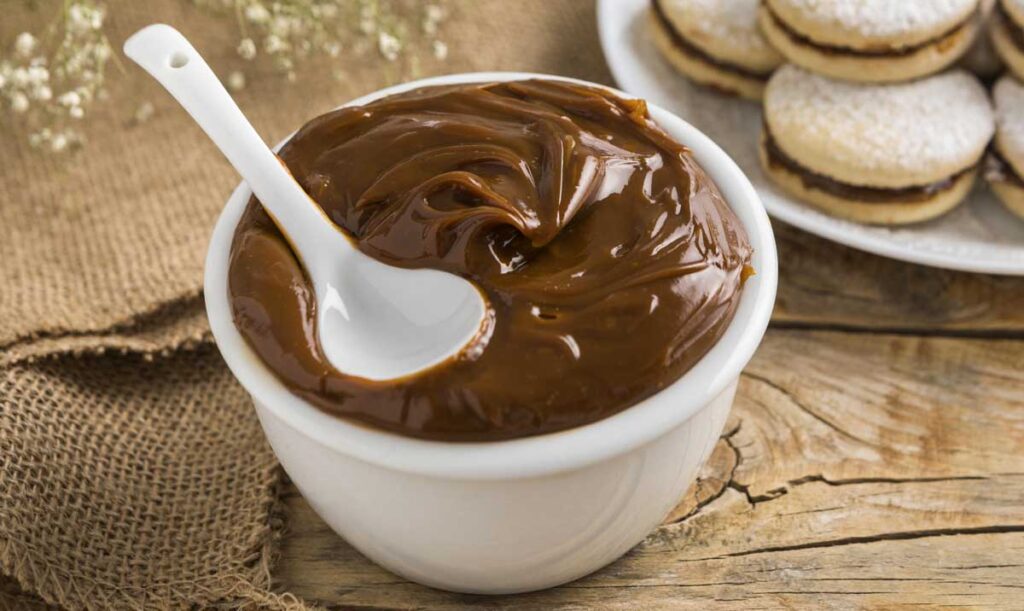
Of course, the dulce de leche or arequipe, as it is known in many places, could not be missing. Undoubtedly, it is another favorite during the Holy Week (Semana Mayor).
Ingredients:
- 1 liter of milk
- 2 cups of sugar
- 1 tablespoon of baking soda
- 1/8 of wheat flour
- 1 tablespoon of cornstarch (maicena)
- ½ cup of water
Preparation: Place the milk in a pot, add the sugar and the baking soda, and bring it to the heat until it thickens and takes on a brown color. Meanwhile, in half a cup of water, dilute the cornstarch and the flour, stir very well, and pass the mixture through a strainer. When the dulce de leche has a completely brown color, add the flour and cornstarch mixture. You must mix it constantly for about 40 minutes.
Other typical Colombian sweets during Holy Week
- Cabellitos de papaya (Candied shredded papaya) (see recipe)
- Dulce de grosellas (Otaheite gooseberry sweet) (see recipe)
- Dulce de mamey (Mamey sapote sweet) (see recipe)
- El Mongo mongo (see recipe)
- Dulce de papa (Potato sweet paste) (see recipe)
- Dulce de tomate de árbol (Tree tomato sweet) (see recipe)
- Dulce de Icacos (Cocoplum sweet) (see recipe)
- Alegrías (Traditional sweet snacks) (see recipe)
- Dulce de pomarrosa (Rose apple sweet) (see recipe)
- Dulce de merey (Cashew fruit sweet) (see recipe)
- Cocadas de Coco (Coconut macaroons) (see recipe)
- Casquitos de guayaba (Guava shells in syrup) (See recipe)
- Postre de natas (Milk skin pudding) (See recipe)
- Dulce de chepacorinas (See recipe)
We hope you liked these typical sweet recipes and that you are encouraged to prepare them, whether during Holy Week or at any other time of the year.
Tell us what other sweets you know that are prepared during this or other festivities.
You may also be interested
Colombian Chef María Cecilia Restrepo Wins Culinary Competition at the GastroAntep 2026 Festival in Türkiye
Colombian Cheese Wins Gold at the 2025 World Cheese Awards in Switzerland
Guineo pachangao o cayeye: Colombian Mashed Green Bananas
The best meatless and fishless recipes for Holy Week